 EN
EN

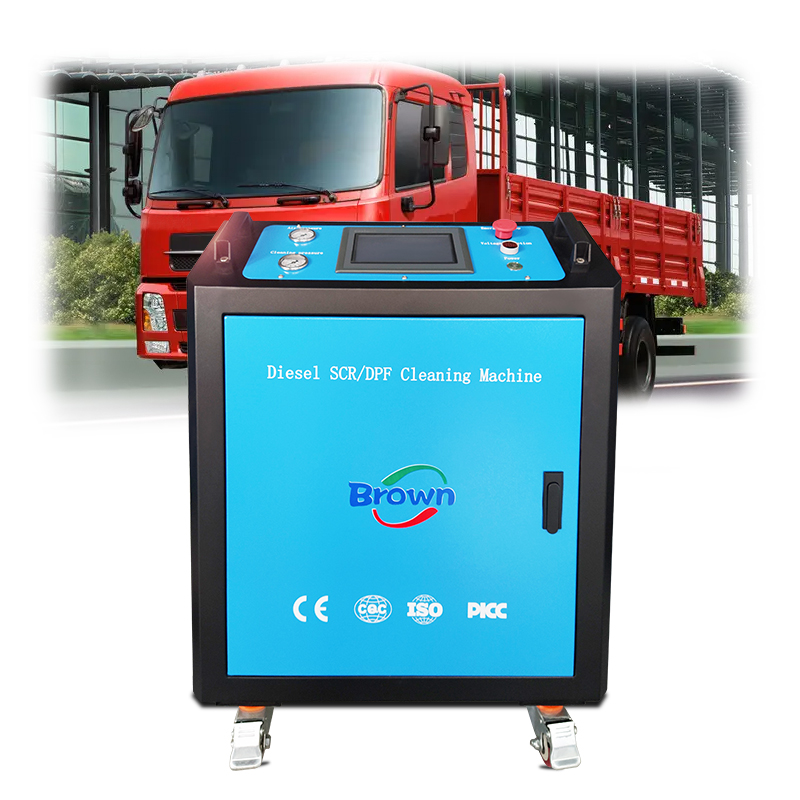
Why Scalable DPF Cleaning Equipment Is Essential for Large Fleets
The Operational Gap: How Manual or Outsourced DPF Cleaning Fails at Scale
Manual and outsourced DPF cleaning creates a bottleneck that large fleets can no longer afford. Vehicles are often pulled offline for 48 hours or more, while inconsistent quality from third-party providers leads to premature filter replacements. A 2024 industry report shows transport firms and municipal fleets account for roughly 70% of professional DPF service demand—overwhelming local shops that lack the capacity to handle bulk volumes (Diesel Maintenance Report, 2024). External cleaning also introduces logistical delays: shipping filters back and forth extends downtime and complicates maintenance scheduling. For fleets managing hundreds of diesel units, these inefficiencies multiply rapidly—eroding uptime and inflating per-filter costs. Without scalable, in-house DPF cleaning equipment, operators face a cycle of reactive maintenance that undermines fleet reliability and total cost control.
Key Scalability Drivers: Throughput Capacity, Automation, and Integration with Fleet Maintenance Workflows
Effective DPF cleaning at scale hinges on three operational pillars. First, throughput capacity must match daily demand; systems that process 50 or more filters per day enable fleets to keep pace with preventive maintenance cycles. Second, automation reduces manual labor and improves consistency—machines with multi-chamber designs and sub-90-minute cycle times can complete three to four full cleans daily. Third, tight integration with existing fleet management software allows cleaning schedules to align with vehicle service intervals, minimizing unscheduled downtime. When operated near peak utilization, such systems can reduce per-filter costs by up to 40% compared to ad-hoc or low-volume processing (Diesel Maintenance Report, 2024). These drivers transform DPF maintenance from a cost center into a predictable, efficient workflow that supports large-scale diesel operations.
High-Throughput DPF Cleaning Equipment Solutions
Ultrasonic and Thermal DPF Cleaning Systems: Benchmarks for 50+ Units/Day
For fleets routinely processing 50 or more DPFs per day, equipment choice directly impacts throughput and turnaround time. Two core technologies—thermal regeneration and ultrasonic cavitation—have emerged as the industry benchmark for high-volume cleaning. Thermal systems use controlled oxidation at temperatures up to 600°C to safely burn off carbon soot without damaging cordierite, silicon carbide, or metal fiber substrates. However, thermal alone cannot remove inorganic ash buildup—this is where ultrasonic cleaning excels. High-frequency sound waves generate microscopic bubbles that implode, dislodging deep-seated ash from filter walls. A fully integrated system combining both methods can restore a DPF to over 95% of its original airflow capacity in under 20 minutes. According to a 2023 fleet maintenance benchmarking study, such dual-method equipment achieves a per-unit cleaning cycle of 15–18 minutes, enabling a single bay to handle 50+ units during an eight-hour shift. Automation features—including robotic loading, closed-loop chemical dosing, and rapid cool-down cycles—further reduce manual intervention and ensure consistent results. To validate performance, operators should verify airflow recovery rate, weight loss, and light penetration testing.
Modular & Mobile DPF Cleaning Equipment for Distributed Regional Hubs
For large fleets operating across multiple regional centers, centralized cleaning at a single depot creates logistical bottlenecks. Modular and mobile cleaning equipment solves this by bringing high-throughput capability directly to distributed hubs. Modular systems allow operators to scale capacity by adding cleaning modules, making it cost-effective to outfit each hub with in-house cleaning. Mobile units—housed in containerized trailers or skid-mounted frames—can be relocated between sites, servicing 20–30 filters per shift. This eliminates the need to ship DPFs to a central facility, compressing the cleaning cycle from days to hours. A 2022 case study of a logistics company with four regional hubs found that deploying a modular, containerized cleaning unit at each site reduced DPF-related vehicle downtime by 60% and cut transportation costs by $12,000 per month. These mobile systems feature integrated air compressors, ultrasonic tanks, and thermal drying ovens—all controlled by a single operator. The flexibility to move equipment with demand ensures even remote hubs maintain consistent emission compliance without relying on third-party services.
Measuring ROI: Downtime Reduction and TCO Advantages of In-House DPF Cleaning Equipment
From 48 Hours to <4 Hours: Quantifying Maintenance Cycle Compression
Outsourcing DPF cleaning typically forces a vehicle off the road for 48 hours or more—time lost to removal, shipping, processing, and return. For large fleets, this downtime multiplies into hundreds of lost operating days annually. In-house DPF cleaning equipment eliminates shipping delays and service queue bottlenecks, compressing the entire maintenance cycle to under 4 hours. Industry data shows external cleaning fees range from $250 to $350 per unit—but the hidden cost of prolonged vehicle unavailability often exceeds the service charge. By bringing cleaning internal, fleets achieve same-day turnarounds: clean filters are reinstalled in the same maintenance window. A fleet of 100 trucks cleaning 500 filters annually would save more than 2,000 vehicle-down days, directly preserving revenue. This rapid cycle not only reduces asset idle time but also improves schedule predictability, allowing maintenance teams to align DPF service with other preventive tasks.
The 42% TCO Advantage: Why Upfront Investment in DPF Cleaning Equipment Pays Back in <18 Months
A total cost of ownership (TCO) analysis consistently reveals that in-house DPF cleaning equipment yields a 42% cost advantage over outsourced models. This figure accounts for equipment amortization, consumables, labor, energy, and avoided external cleaning fees. For a fleet servicing 500 filters annually, the per-filter cost drops from approximately $300 to well under $180—generating savings that enable a payback period of less than 18 months. The TCO advantage is further amplified by lower vehicle downtime costs and extended filter lifespan achieved through more frequent, controlled cleaning cycles. Modern thermal and ultrasonic cleaning systems, when integrated into a fleet’s workflow, transform DPF maintenance from a variable cost center into a predictable, low-overhead function. Many operators achieve full capital recovery within 14–16 months, after which the equipment contributes directly to margin expansion. This shift—from a reactive, outsourced expense to an owned, scalable resource—represents the single most effective lever for controlling fleet particulate filter costs.
FAQ
What is DPF cleaning, and why is it important?
DPF cleaning refers to the process of removing soot, carbon deposits, and ash buildup from diesel particulate filters to restore their efficiency. It is crucial for maintaining emissions compliance and preventing engine damage.
What are the benefits of in-house DPF cleaning equipment?
In-house equipment offers faster turnaround times (under 4 hours), reduced downtime, cost savings, and control over maintenance schedules. It also eliminates reliance on third-party services and logistics challenges.
How do ultrasonic and thermal cleaning technologies work?
Thermal cleaning safely burns off carbon at high temperatures, while ultrasonic cavitation removes deep-seated inorganic ash using sound waves. Combining these methods achieves optimal cleaning results.
Can mobile DPF cleaning equipment be relocated easily?
Yes, mobile systems are designed for easy relocation between regional hubs, ensuring consistent cleaning capabilities across distributed fleet operations.
How quickly can fleets recoup their investment in DPF cleaning equipment?
Most fleets achieve full capital recovery within 14–18 months due to significant cost savings and reduced vehicle downtime.