 EN
EN

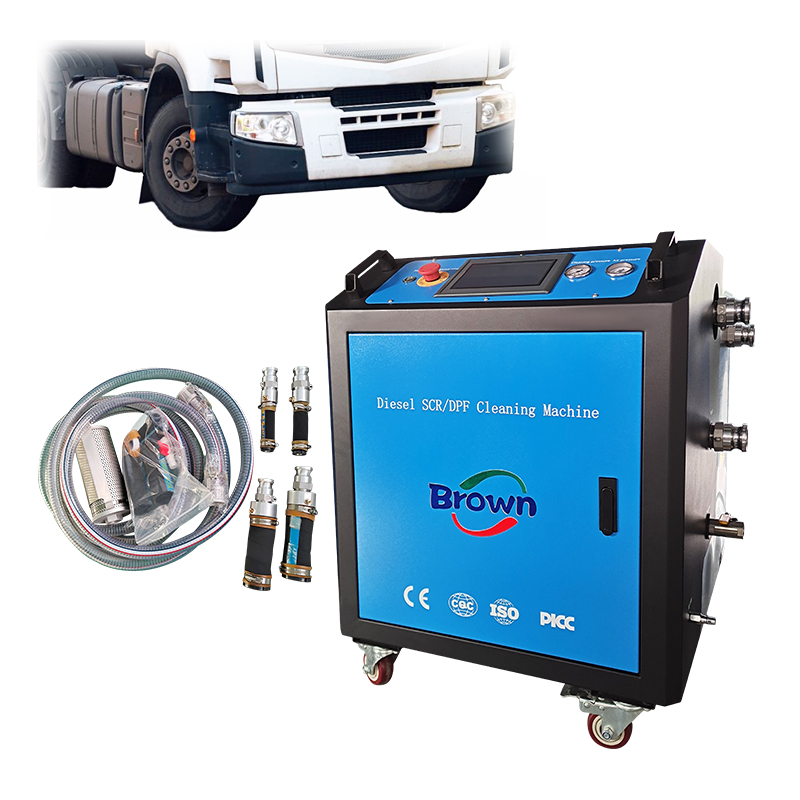
Cost Savings: Reduce Outsourcing Expenses and Downtime with In-House DPF Cleaning Equipment
Eliminate recurring labor, shipping, and third-party markup costs ($185–$320 per job)
Outsourcing diesel particulate filter (DPF) cleaning typically costs $185–$320 per unit—a figure validated by 2023 fleet maintenance cost benchmarks. This total includes labor, specialized packaging, two-way freight ($45–$75), and a 20–30% third-party markup. For a mid-sized fleet servicing 15 DPFs monthly, that adds up to $2,775–$4,800 in recurring outflow—directly eroding maintenance budgets. Professional in-house DPF cleaning equipment replaces this variable expense model with predictable, fixed-cost operation: consumables and operator time average under $40 per cycle. With payback often achieved in under 12 months, shops lock in cost certainty, eliminate surprise surcharges, and retain full margin on each service—either strengthening profitability or enabling competitive pricing.
Cut turnaround time from 3–5 days to <90 minutes—recovering ~12 billable hours monthly per technician
Outsourced DPF cleaning sidelines vehicles for 3–5 days while filters are shipped, processed, and returned—consuming billable time and often triggering substitute vehicle costs or overtime. In contrast, certified in-house systems complete a full thermal-pneumatic cleaning cycle—including cool-down and final inspection—in under 90 minutes. That means trucks return to revenue service the same day, eliminating technician time spent tracking shipments or managing loaners (typically 2 hours weekly). Over a month, this reclaims approximately 12 billable hours per technician—worth $1,500–$1,800 at average shop rates of $125–$150/hour. The result is a leaner, more responsive operation where downtime is measured in minutes—not days—and every technician hour contributes directly to service revenue.
Regulatory Compliance: Meet EPA and CARB Requirements with Certified DPF Cleaning Equipment
Traceable validation metrics (pressure drop, flow rate, soot mass) required for audit-ready documentation
EPA and CARB compliance demands objective, quantifiable proof—not just visual confirmation—that a DPF has been restored to specification. Certified professional DPF cleaning equipment generates audit-ready documentation anchored in three traceable metrics: pressure drop (measured in kPa against OEM baselines), exhaust flow rate (to verify restored throughput), and post-cleaning soot mass (to confirm particulate load falls below regulatory thresholds). Without these data points, fleets cannot demonstrate repair effectiveness during inspections. Modern systems integrate digital sensors that auto-log all three values into tamper-proof records—directly supporting maintenance files and satisfying EPA anti-tampering rules and CARB’s Periodic Smoke Inspection Program. By replacing subjective judgment with calibrated, repeatable validation, shops transform compliance from a risk into a documented strength.
Technical Performance: Achieve Consistent, Validated Results Using Multi-Mode DPF Cleaning Equipment
Thermal + ultrasonic integration delivers >92% ash removal (SAE J2993-2022 validated)
Multi-mode DPF cleaning systems that combine controlled thermal treatment with ultrasonic cavitation achieve superior, standardized results unattainable with single-method approaches. Thermal processing oxidizes carbon deposits and weakens ash adhesion to channel walls; ultrasonic energy then dislodges residual ash—even from deep within the substrate—via precisely tuned pressure waves and microbubble implosion. This integrated process consistently achieves over 92% ash removal, as verified by SAE J2993-2022, the industry standard for DPF cleaning effectiveness. The outcome is a filter restored to near-original pressure drop and flow characteristics—eliminating performance lag associated with partial cleaning—while real-time energy monitoring prevents thermal shock or structural damage.
Precision chemical passivation with ISO 16750-2 compliant fluid delivery and temperature control
A critical final step—chemical passivation—stabilizes the cleaned substrate and prevents rapid re-soiling. High-performance DPF cleaning equipment delivers passivation agents through a closed-loop system engineered to meet ISO 16750-2 environmental durability requirements. Integrated temperature sensors and automated flow regulators ensure uniform application across the entire filter matrix, maintaining precise fluid temperature and dwell time. This eliminates variability inherent in manual methods and ensures corrosion protection for metal components while neutralizing residual acidic compounds. The result is extended DPF service life, reduced ash re-agglomeration, and a fully programmed, monitored sequence—cleaning, rinse, passivation, and drying—that delivers consistent, OEM-aligned outcomes and audit-ready verification.
Business Growth: Unlock Revenue, Margin Uplift, and Competitive Differentiation with Professional DPF Cleaning Equipment
Investing in professional DPF cleaning equipment transforms a maintenance shop into a high-margin service center. By cutting outsourced costs ($185–$320 per job), shops retain over 80% of the service fee as gross profit—accelerating ROI, often within the first year. Faster turnaround (<90 minutes vs. 3–5 days) further amplifies capacity: technicians service more vehicles daily and generate additional billable hours without adding labor.
This capability also unlocks new revenue streams. Shops can bundle DPF cleaning with inspections, oil changes, and preventive maintenance—raising average ticket values. Fleet operators prioritize partners who offer documented, compliant filter care; in-house capability signals reliability, technical authority, and operational readiness—driving repeat business and long-term contracts.
As global emissions regulations tighten, shops with certified, in-house DPF cleaning position themselves as aftertreatment specialists—not just mechanics. They capture growing aftermarket demand fueled by both regulatory mandates and the economic advantage of cleaning over replacement. Early adopters gain lasting differentiation: stronger margins, expanded customer loyalty, and leadership in an expanding $1.2B+ global DPF cleaning equipment market.
FAQ
What is the average cost of outsourcing DPF cleaning?
Outsourcing DPF cleaning costs between $185–$320 per unit, including labor, shipping, specialized packaging, and third-party markup.
How does in-house DPF cleaning equipment save costs?
In-house DPF cleaning equipment replaces variable outsourcing costs with predictable expenses. Consumables and operator time average under $40 per cycle, leading to significant savings.
How quickly can certified in-house DPF systems clean filters?
Certified systems complete a full cleaning cycle in under 90 minutes, including cool-down and inspection—much faster than the 3–5 days required for outsourcing.
What compliance standards do professional DPF cleaning equipment meet?
Such equipment meets EPA and CARB requirements, providing traceable metrics like pressure drop, flow rate, and soot mass for audit-ready documentation.
What is the benefit of thermal and ultrasonic integration in DPF cleaning?
Thermal treatment weakens ash adhesion, while ultrasonic cavitation dislodges residues, achieving over 92% ash removal and restoring filter performance effectively.
Table of Contents
- Cost Savings: Reduce Outsourcing Expenses and Downtime with In-House DPF Cleaning Equipment
- Regulatory Compliance: Meet EPA and CARB Requirements with Certified DPF Cleaning Equipment
- Technical Performance: Achieve Consistent, Validated Results Using Multi-Mode DPF Cleaning Equipment
- Business Growth: Unlock Revenue, Margin Uplift, and Competitive Differentiation with Professional DPF Cleaning Equipment
-
FAQ
- What is the average cost of outsourcing DPF cleaning?
- How does in-house DPF cleaning equipment save costs?
- How quickly can certified in-house DPF systems clean filters?
- What compliance standards do professional DPF cleaning equipment meet?
- What is the benefit of thermal and ultrasonic integration in DPF cleaning?