 EN
EN

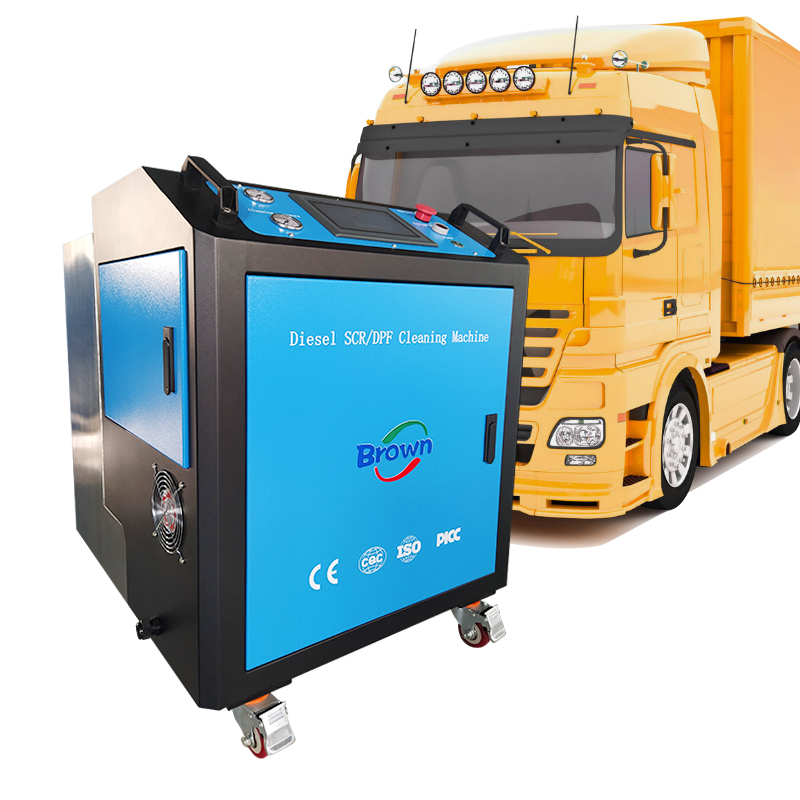
Why SCR Cleaning Machines Are Essential for Exhaust System Reliability
The Dual Threat: Ammonium Sulfate/Bisulfate and Soot Accumulation in SCR Catalysts
Selective catalytic reduction (SCR) systems rely on precise chemical reactions to convert nitrogen oxides (NOₓ) into harmless nitrogen and water. Over time, two primary contaminants accumulate on the catalyst surface: ammonium sulfate and bisulfate salts—formed when unreacted ammonia (NH₃) combines with sulfur oxides from diesel exhaust—and carbonaceous soot that bypasses the diesel particulate filter. These deposits physically block the catalyst’s micro-pores and active sites, impeding exhaust gas access. An SCR cleaning machine is engineered to remove this layered fouling without damaging the delicate washcoat. Industry measurements show untreated fouling can reduce NOₓ conversion efficiency by 25–40% within 2,000 operating hours (SAE International 2022), directly threatening emissions compliance. Because the combination of sticky, acidic salts and abrasive carbon particles resists passive regeneration, professional cleaning remains the only reliable method to restore core functionality.
Consequences of Untreated Fouling: Back-Pressure Rise, NOₓ Conversion Drop, and Regeneration Failure
Clogged SCR catalysts cause exhaust back-pressure to spike, forcing the engine to work harder and increasing fuel consumption by 3–5% (Cummins 2021). Elevated pressure also disrupts DEF dosing accuracy—raising NH₃ slip and promoting secondary pollutant formation. As fouling progresses, NOₓ conversion falls below regulatory thresholds, triggering repeated active regeneration attempts that risk thermal aging and substrate damage. A field study of municipal bus fleets found severely fouled SCR systems experienced a 32% rise in back-pressure and a 50% decline in NOₓ reduction within 18 months (Fleet Equipment 2023). Left unchecked, this cycle accelerates toward regeneration failure, catalyst sintering, and irreversible damage. Regular use of a dedicated SCR cleaning machine interrupts this degradation, preserving design efficiency and preventing costly unplanned downtime.
How SCR Cleaning Machines Work: Principles, Technologies, and Real-World Efficacy
Ultrasonic Cleaning vs. Thermal and Mechanical Methods: Mechanisms and Limitations
SCR cleaning machines deploy targeted approaches to remove deposits without compromising catalyst integrity. Ultrasonic cleaning uses high-frequency sound waves in a liquid bath to generate microscopic cavitation bubbles that implode on the catalyst surface—dislodging ammonium sulfate, bisulfate, and soot non-abrasively. However, it often lacks penetration for thick, baked-on crystalline layers deep within micro-channels. Thermal methods heat the substrate to 500–600 °C to oxidize carbon and decompose ammonium salts—but repeated cycling risks ceramic stress and washcoat delamination. Mechanical techniques like dry ice blasting or high-pressure water jets physically scour surfaces yet carry erosion and channel deformation risks. Modern SCR cleaning machines increasingly combine low-intensity ultrasonic agitation with chemical preconditioning agents—optimizing removal efficacy while safeguarding the catalyst structure.
Field Validation: 32% Back-Pressure Reduction in Marine Gensets After SCR Cleaning Machine Deployment
A 2023 field trial on four-stroke marine gensets operating over 12,000 hours on heavy fuel oil confirmed the real-world impact of a dedicated SCR cleaning machine. Pre-cleaning data showed a 19% rise in exhaust back-pressure and a 14% drop in NOₓ conversion efficiency. Following a single cleaning cycle using an ultrasonic-chemical hybrid method, average back-pressure fell by 32% (Marine Emission Control Report 2023), restoring turbocharger surge margin and lowering fuel consumption by 2.3%. Surface analysis revealed ammonium bisulfate coverage dropped from 68% to under 8%. Critically, the cleaning eliminated the need for scheduled catalyst replacement—avoiding an estimated $140,000 in parts costs and three weeks of vessel downtime.
SCR Cleaning Machine Integration for Proactive Exhaust System Maintenance
Trigger-Based Cleaning Cycles: Linking Urea Dosing Health, NH₃ Slip Trends, and Catalyst Monitoring Data
Proactive integration of an SCR cleaning machine depends on data-driven, trigger-based maintenance—not calendar intervals. Continuous monitoring of urea dosing health, NH₃ slip trends, and catalyst differential pressure detects early-stage fouling before performance degrades. For example, a sustained rise in NH₃ slip above baseline—especially when paired with increasing back-pressure—signals either urea injector degradation or ammonium sulfate buildup. When indicators cross predefined thresholds—such as a 15% increase in pressure drop or NH₃ slip exceeding 10 ppm—the system automatically initiates a cleaning cycle. This approach removes reversible foulants precisely when needed, avoiding unnecessary servicing while sustaining NOₓ conversion above 90%. By linking urea system diagnostics to cleaning frequency, operators shift maintenance from reactive to predictive—reducing unplanned downtime and extending catalyst life.
Extending Catalyst Life: SCR Cleaning Machine’s Role in Mitigating Deactivation Pathways
Fouling vs. Poisoning vs. Thermal Degradation—Where SCR Cleaning Machines Deliver Maximum ROI
Catalyst deactivation occurs through three distinct pathways—only one of which is fully reversible with current cleaning technology. Fouling—physical blockage by ammonium sulfate/bisulfate and soot—is the most common and directly addressable failure mode. SCR cleaning machines deliver maximum return on investment (ROI) by reversing this mechanical obstruction via ultrasonic, thermal, or hybrid methods. In contrast, chemical poisoning (e.g., by phosphorus or heavy metals) permanently binds to active sites, rendering cleaning ineffective. Likewise, thermal degradation causes irreversible sintering and structural collapse of the ceramic substrate. By focusing maintenance resources on removing reversible foulants, operators significantly extend catalyst service life and avoid large, unbudgeted capital expenditures tied to premature replacement—making SCR cleaning a strategic investment in long-term exhaust system reliability.
FAQs
What does an SCR cleaning machine do?
An SCR cleaning machine removes ammonium sulfate, bisulfate, and soot deposits from SCR catalysts without damaging the delicate washcoat, restoring the system's efficiency and compliance with NOₓ conversion standards.
How often should SCR cleaning be performed?
Cleaning cycles should be triggered based on monitoring data, including rising back-pressure, increased NH₃ slip, and differential pressure. Reactive maintenance can be avoided, and intervals depend on operating conditions.
What technologies are used in SCR cleaning machines?
Technologies include ultrasonic cleaning, thermal methods, mechanical cleaning (dry ice blasting, high-pressure water jets), and hybrid ultrasonic-chemical approaches combining low-impact agitation with preconditioning agents.
Is catalyst fouling reversible?
Yes, fouling caused by ammonium sulfate, bisulfate, and soot is reversible through SCR cleaning, while poisoning and thermal degradation are permanent.
How does SCR cleaning reduce operating costs?
By reducing exhaust back-pressure, SCR cleaning machines improve fuel efficiency, extend catalyst life, and avoid costly replacements or unplanned downtime.
Table of Contents
- Why SCR Cleaning Machines Are Essential for Exhaust System Reliability
- How SCR Cleaning Machines Work: Principles, Technologies, and Real-World Efficacy
- SCR Cleaning Machine Integration for Proactive Exhaust System Maintenance
- Extending Catalyst Life: SCR Cleaning Machine’s Role in Mitigating Deactivation Pathways
- FAQs