 EN
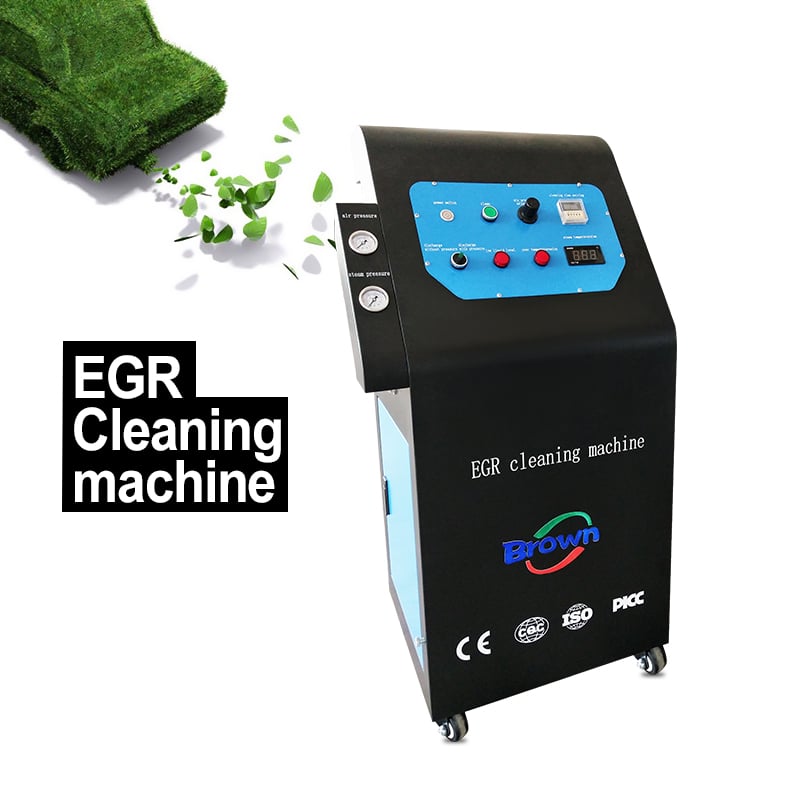
Why EGR Cleaning Machines Are Essential for Modern Workshop Viability
Rising EGR valve failure rates in diesel and gasoline engines driving demand for in-house cleaning
EGR valves are increasingly prone to failure due to tighter engine tolerances and higher exhaust temperatures in modern diesel and gasoline direct injection engines. A 2023 industry study found that EGR-related faults now account for 18% of all engine management repairs—double the rate recorded in 2018—driven by accelerated soot accumulation in smaller, hotter engines and stop-start driving cycles. Direct injection gasoline engines face similar coking challenges, broadening the market beyond diesel-only workshops. Outsourcing cleaning adds up to five days of turnaround time, eroding customer trust and diverting repair work to dealerships. By investing in an in-house EGR cleaning machine, small and medium garages can diagnose, clean, and return vehicles within a single business day—boosting bay throughput, capturing high-margin service revenue, and positioning themselves as local experts in emissions system care. The equipment typically pays for itself quickly through eliminated outsourcing fees and reduced vehicle downtime.
Carbon buildup consequences: reduced intake efficiency, failed emissions tests, and lost warranty repair opportunities
Carbon buildup on EGR valves and intake runners restricts airflow, degrades combustion efficiency, and contributes to misfires and rough idling. Vehicles with clogged EGR systems are three times more likely to exceed NOx limits, risking inspection failures and fines—especially for commercial fleets, per a 2022 emissions compliance report. For workshops, neglecting EGR cleaning means forfeiting warranty-eligible repair work; many extended service contracts now mandate documented cleaning as part of emissions system maintenance. Manual solvent washing is not only hazardous and inconsistent but often fails to remove deeply embedded deposits, leading to rapid re-coking and costly comebacks. An ultrasonic EGR cleaning machine delivers repeatable, non-damaging results that restore up to 95% of original intake flow—improving throttle response and fuel economy by 3–5%. These measurable outcomes help shops confidently justify the service to cost-conscious customers while ensuring long-term vehicle compliance and profitability.
Ultrasonic EGR Cleaning Machines: Technology That Delivers Precision and Throughput
How targeted ultrasonic frequency and degreasing chemistry achieve >92% carbon removal without part wear
Ultrasonic EGR cleaning machines generate high-frequency sound waves—typically between 25 and 40 kHz—that create microscopic cavitation bubbles in a heated, water-based alkaline cleaning solution. When these bubbles collapse near carbon deposits, they produce localized shockwaves capable of dislodging even hardened soot from blind holes, cooler channels, and intricate valve passages—without scratching aluminum or steel surfaces. The degreasing chemistry emulsifies oil and dissolves coke while preventing redeposition. Together, precise frequency control and purpose-formulated chemistry routinely achieve >92% carbon removal while preserving dimensional integrity and surface finish. Unlike manual scraping or abrasive blasting, this non-contact method eliminates part wear, extends component life, and restores critical airflow characteristics required by modern diesel and gasoline engines.
Key selection criteria for small/medium workshops: compact tank size, 25–40 kHz range, and <12-minute cycle time
For small and medium garages, practicality matters as much as performance. Opt for benchtop or under-bench units with stainless-steel tanks sized between 8–15 liters—large enough for most EGR valves and coolers, yet compact enough to fit into tight workshop spaces. The ultrasonic generator should operate across the 25–40 kHz range: lower frequencies deliver stronger cleaning action for heavy carbon loads, while higher frequencies offer finer precision for sensitive components like integrated sensors. Variable- or dual-frequency capability adds valuable flexibility. Cycle time directly impacts daily capacity—systems with optimized heating (up to 80°C) and 40 kHz transducers can complete full cleans in under 12 minutes, enabling technicians to process 4–5 units per hour. Digital timers, auto-degas modes, and built-in oil skimmers further simplify operation, reduce chemical consumption, and lower the skill threshold—making ultrasonic cleaning a reliable, scalable in-house service.
ROI-Focused EGR Cleaning Machine Investment for Small and Medium Garages
Fast payback: breakeven in under 8 weeks at just 12–15 EGR cleaning jobs per month
A dedicated EGR cleaning machine transforms a routine maintenance task into a high-margin profit center. Most independent shops charge $180–$250 per cleaned valve—a procedure that takes under 12 minutes with a modern ultrasonic system. At just 13 jobs per month billed at $200 each, gross revenue reaches $2,600, recovering the full cost of a compact $3,500 unit in roughly 5.7 weeks. Even conservatively pricing at $150 per job and performing only 12 cleans monthly yields breakeven in eight weeks—after which nearly all revenue flows directly to the bottom line. This calculation excludes additional walk-in demand: diesel and gasoline vehicles commonly require EGR maintenance every 50,000–60,000 miles. Bringing cleaning in-house also eliminates courier fees and the 2–3-day turnaround typical of outsourced work, allowing same-day scheduling and maximizing bay utilization. With minimal supervision needed during the automated cycle, one technician can easily manage 20+ jobs per week—rendering per-unit labor cost negligible and accelerating ROI.
Space-efficient footprint and labor savings vs. outsourcing or manual solvent washing
An ultrasonic EGR cleaning machine occupies less than 2 square feet of bench space—fitting comfortably in crowded workshops while replacing bulky manual wash tanks, solvent storage, and ventilation setups. The table below compares operational realities across common cleaning methods:
| Method | Approx. Cost per Job | Bench Space Required | Labor Minutes per Job | Cleaning Consistency | Safety & Compliance Risk |
|---|---|---|---|---|---|
| In-house ultrasonic machine | $18–$25 post-breakeven | 1.5–2.0 sq ft | 10–12 | Consistent >92% removal, no part wear | Low—closed-loop degreaser, minimal solvent handling |
| Outsourced cleaning | $80–$120 + courier | None | 5 (admin) | Variable—dependent on third-party process | Low for the workshop itself |
| Manual solvent washing | $12–$20 + disposal | 8–10 sq ft + ventilation | 40–60 | Uneven—heavily reliant on operator technique | High—open solvent exposure, hazardous waste disposal, fire hazard |
Switching to an ultrasonic unit slashes per-job labor from 40+ minutes of hands-on scrubbing to just 12 minutes of supervised automation. Technicians load the disassembled valve, start the preset cycle, and attend to other tasks while the machine runs. Modern systems use non-volatile, water-based degreasers with built-in filtration—dramatically reducing disposal costs, chemical exposure risk, and regulatory liability. Over a year, the combined gains in labor efficiency, courier elimination, and retained service margins generate enough profit to fund additional diagnostic tools or staff training—all from a machine that occupies no more space than a desktop printer.
Compliance-Ready Operation: Waste Handling, Solvent Safety, and Filter Maintenance
Compliance is not an afterthought when using an EGR cleaning machine—it’s a daily operational discipline that protects your workshop, your team, and your business license. Small and medium garages can turn regulatory adherence into a competitive advantage by embedding simple, repeatable protocols into daily workflow. Focus attention on three core areas:
-
Waste handling: Segregate carbon-laden sludge, spent cleaning solution, and disposable filters into clearly labeled, leak-proof containers. Schedule regular pickup by a licensed hazardous waste carrier and maintain a disposal log—a requirement under most local environmental codes. This prevents accidental cross-contamination of waste streams, avoiding potential site cleanup orders or enforcement penalties.
-
Solvent safety: Select low-toxicity, biodegradable, water-based cleaning chemistries wherever possible. Store concentrated solvents in a fire-resistant, ventilated cabinet away from ignition sources. Equip the ultrasonic bath area with a spill containment pallet and a clearly marked eyewash station. Train all technicians in proper PPE use and strictly prohibit mixing solvent brands, as incompatible formulations can produce hazardous off-gassing.
-
Filter maintenance: Replace the ultrasonic tank’s sludge filter at the manufacturer-recommended interval—typically every 80–120 operating hours. Inspect and clean the vapor extraction filter regularly to prevent aromatic hydrocarbon buildup in workshop air, which may trigger occupational health concerns. A clogged filter reduces cleaning efficiency, extends cycle times, and overworks the pump—increasing the risk of premature failure and unplanned repair costs.
FAQ
What are the benefits of using an ultrasonic EGR cleaning machine compared to manual methods?
Ultrasonic EGR cleaning machines offer consistent cleaning results (>92% removal), protect components from wear, reduce labor time, improve safety, and ensure alignment with regulatory compliance.
How quickly can an ultrasonic EGR cleaning machine pay for itself?
A compact ultrasonic EGR cleaning machine can achieve breakeven in as little as 5.7 to 8 weeks, depending on service volume and pricing.
What size ultrasonic EGR cleaning machine is suitable for small garages?
Small garages should choose units with 8–15-liter tanks, operating within the 25–40 kHz frequency range, for optimized cleaning performance and compact footprint.
How can small garages ensure compliance while using ultrasonic EGR cleaning machines?
Garages should implement proper waste handling, use safe solvents, and adhere to filter maintenance schedules to meet compliance and environmental codes.
Table of Contents
- Why EGR Cleaning Machines Are Essential for Modern Workshop Viability
- Ultrasonic EGR Cleaning Machines: Technology That Delivers Precision and Throughput
- ROI-Focused EGR Cleaning Machine Investment for Small and Medium Garages
- Compliance-Ready Operation: Waste Handling, Solvent Safety, and Filter Maintenance
-
FAQ
- What are the benefits of using an ultrasonic EGR cleaning machine compared to manual methods?
- How quickly can an ultrasonic EGR cleaning machine pay for itself?
- What size ultrasonic EGR cleaning machine is suitable for small garages?
- How can small garages ensure compliance while using ultrasonic EGR cleaning machines?