 EN
EN

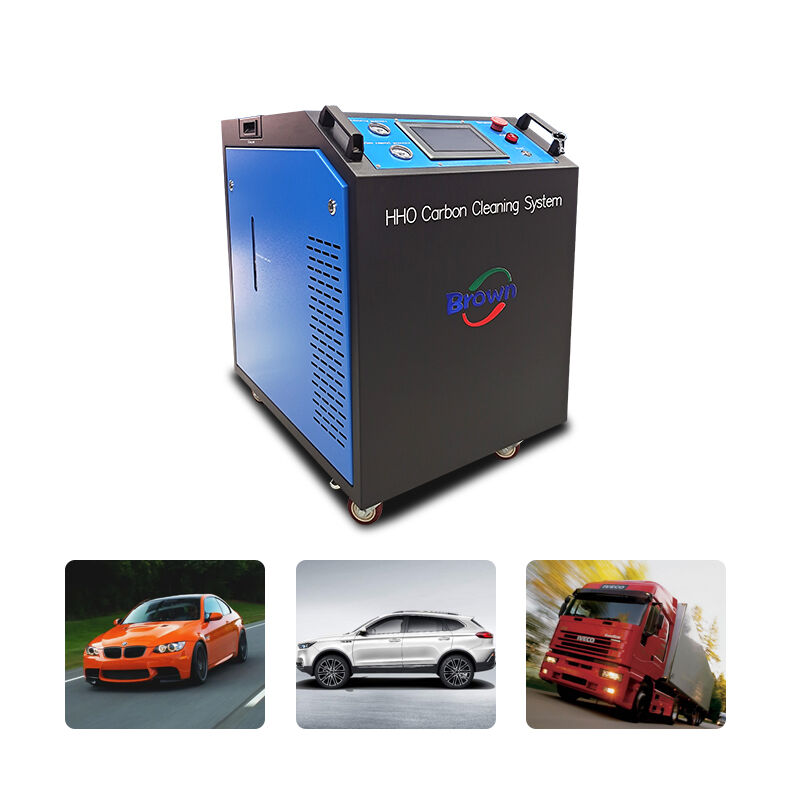
How an HHO Carbon Cleaning Machine Removes Deposits Without Disassembly
Core Mechanism: Electrolytic HHO gas generation and in-situ oxidation of carbon deposits
HHO carbon cleaning machines generate a hydrogen-oxygen gas mixture through electrolysis of distilled water with a small amount of catalyst. The gas enters the engine via the air intake while the engine idles, mixing with the normal air-fuel charge. Inside the combustion chamber, hydrogen burns at a significantly higher flame speed than gasoline or diesel, creating a controlled thermal reaction that oxidizes carbon deposits into carbon dioxide and fine particulate matter. This in-situ oxidation reaches injector nozzles, intake valve stems, piston crowns, and turbocharger vanes without mechanical disassembly. Because the process occurs during normal combustion cycles, the engine control unit (ECU) dynamically adjusts ignition timing and fuel delivery to maintain safe operation. The loosened carbon exits through the exhaust stream—partially cleaning the DPF as it passes—eliminating the risks of surface damage associated with scraping or aggressive chemical soaking.
Engineering Safeguards: Preventing thermal shock, maintaining OEM material compatibility
Machine designers incorporate multiple safeguards to protect engine components. First, HHO gas concentration is precisely regulated via pulse-width modulation to prevent excessive temperature spikes that could cause thermal shock to cast iron or aluminum surfaces. Gas introduction occurs gradually during a warm idle cycle, allowing for uniform thermal expansion. Second, the oxidation reaction selectively targets carbon deposits without degrading metals, elastomers, or gaskets—unlike solvent-based decarbonization, HHO cleaning uses no harsh chemicals and fully respects OEM material tolerances. Third, automated shut-off controls continuously monitor intake temperature, engine RPM, and gas flow rate, halting the process immediately if any parameter exceeds safe thresholds. These integrated engineering measures enable workshops to deliver a non-invasive service that preserves factory compression ratios and sealing integrity—significantly reducing the risk of post-service leaks compared to traditional teardown methods.
Critical Engine Components Treated by the HHO Carbon Cleaning Machine
Precision cleaning of fuel injectors, intake valves, combustion chambers, turbos, and DPF/FAP systems
An HHO carbon cleaning machine treats the most deposit-prone areas of an engine without physical contact. The electrolytically generated hydrogen-oxygen gas enters through the air intake and travels deep into the combustion system. During controlled idle operation, the gas burns at elevated but safe temperatures, softening and oxidizing accumulated carbon layers across critical components:
- Fuel injectors – Restores precise spray patterns and consistent flow rates.
- Intake valves – Removes sticky, resinous buildup that impairs valve sealing and airflow.
- Combustion chambers – Eliminates hardened carbon on piston crowns and cylinder walls, improving heat transfer and combustion efficiency.
- Turbochargers – Clears turbine housings and variable-geometry vanes, restoring spool response and boost pressure.
- Diesel particulate filters (DPF) and FAP systems – Partially oxidizes trapped soot, supporting passive regeneration and reducing forced regen frequency.
By acting simultaneously on these interdependent systems, the process restores optimal air-fuel mixing, lowers exhaust backpressure, and renews volumetric efficiency. A typical cleaning cycle lasts 30–45 minutes, with loosened carbon exiting harmlessly through the exhaust as CO₂ and sub-micron particulates. This non-invasive approach delivers measurable performance and emissions benefits—without the cost, labor, or risk of disassembly.
Proven Performance: Real-World Results from HHO Carbon Cleaning Machines
Dynamometer validation: 32% gain in volumetric efficiency and restored throttle response (2023 independent study)
Controlled dynamometer testing conducted in 2023 confirmed that a single HHO carbon cleaning session increases volumetric efficiency by up to 32%. This improvement results directly from near-complete removal of carbon deposits from intake valves and combustion chambers—restoring unimpeded airflow and optimal combustion chamber geometry. Throttle response improves measurably: acceleration lag decreases by 0.3–0.5 seconds, with drivers reporting sharper transient response and smoother power delivery. Diesel engines gained ~15% peak horsepower; turbocharged gasoline engines saw average torque increases of 18 N·m. These gains reflect real-world drivability—not just lab metrics—and stem from the rapid, in-situ oxidation of carbon layers without component removal or chemical residue.
Fleet operations data: 40–60% extension of DPF regeneration cycles and measurable NOx reduction
Fleet operators using HHO carbon cleaning report extending DPF regeneration intervals by 40–60%, reducing both downtime and fuel consumption tied to active regenerations. Cleaner combustion lowers soot accumulation rates, delaying the threshold that triggers forced regeneration. Emissions testing shows consistent reductions: NOx drops 10–15%, alongside measurable declines in CO and hydrocarbons. Real-world fleet fuel economy improves by 10–15%, compounding operational savings over time. Fewer regenerations also correlate with longer DPF service life and reduced maintenance interruptions. Completed in under two hours per vehicle—and easily integrated into routine preventive maintenance—the procedure adds minimal complexity while delivering sustained performance and compliance benefits.
Selecting and Deploying a Professional-Grade HHO Carbon Cleaning Machine
When choosing an HHO carbon cleaning machine for a workshop or fleet operation, prioritize units that balance portability with intelligent automation. Compact models under 50 pounds allow technicians to move equipment seamlessly between bays. Digital touchscreens and pre-programmed, vehicle-specific cycles minimize operator error and reduce training time—enabling consistent results even for entry-level staff. The workflow is streamlined: connect the output hose to the engine’s air intake using universal adapters, select the appropriate cycle, and run for 90–120 minutes per vehicle. This cuts labor time by approximately 70% versus traditional disassembly methods and eliminates the risk of damaging sensors, gaskets, or delicate intake components.
For commercial fleets, ROI is rapid—driven by reduced unscheduled repairs, extended DPF intervals, and lower fuel spend. Integrating HHO cleaning every 50,000 miles helps sustain peak volumetric efficiency and forestall costly interventions like valve jobs or turbo replacements. Crucially, select machines built with robust, long-life electrolytic cells and certified safety interlocks—ensuring hydrogen gas output remains within strict temperature, pressure, and concentration limits while preserving OEM material compatibility and ECU stability.
FAQ
What is an HHO carbon cleaning machine?
An HHO carbon cleaning machine generates a hydrogen-oxygen gas mixture through the electrolysis of distilled water, which is then used to remove carbon deposits from engine components without disassembly.
How does HHO carbon cleaning work?
The machine introduces HHO gas into the engine via the air intake while the engine is running. The gas burns during combustion to oxidize and remove carbon deposits from critical engine parts.
Is HHO carbon cleaning safe for engines?
Yes, it is safe. HHO machines have built-in safety features, such as regulated gas concentration and automated shut-off, to prevent damage to engine components and ensure compatibility with OEM material standards.
Can HHO carbon cleaning improve engine performance?
Yes, the process can restore volumetric efficiency, improve throttle response, extend DPF regeneration intervals, and reduce emissions, leading to better engine performance and fuel economy.
How often should HHO carbon cleaning be performed?
For optimal results, it is recommended to perform HHO carbon cleaning every 50,000 miles or during regular maintenance intervals.