 EN
EN

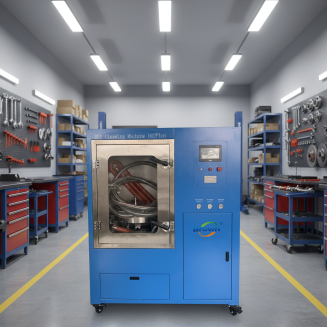
Core Types of DPF Cleaning Equipment and Their Maintenance Requirements
Effective maintenance of DPF cleaning equipment directly impacts restoration quality and operational costs. Understanding each system's unique components and failure points enables targeted preventive care.
Mechanical cleaning cabinets: pressure systems, filtration, and wear-prone components
Most mechanical cabinets depend on those high pressure pumps running between 100 to 150 PSI to knock loose all that stubborn particulate matter stuck inside. The daily checkup routine should focus heavily on those parts that wear down fast over time. Piston seals and valve seats take a real beating from all that abrasive stuff floating around, so they degrade much quicker than other components. Don't forget about those filter cartridges either. They need changing at least once a week otherwise contaminants will find their way through the system and leave behind incomplete cleaning results. Keeping the pressure calibrated after every 200 operation cycles helps maintain steady flow throughout the process. Lubricating all those moving parts regularly is another must do task since friction buildup leads to premature breakdowns. According to recent studies published in Industrial Equipment Journal back in 2023, skipping proper hydraulic maintenance raises the chances of pump failure by almost three quarters within just one year.
Ultrasonic and air knife systems: unique maintenance needs for transducers, nozzles, and compressed air quality
The efficiency of ultrasonic systems drops off significantly when mineral buildup starts forming on those vibrating surfaces of the piezoelectric transducers. Regular cleaning with citric acid once a month helps maintain that important resonance frequency. For air knife setups, getting those nozzles aligned just right matters a lot, plus we need really clean compressed air for everything to work properly. Moisture traps should get emptied every single day if we want to prevent thermal shock problems during operations at high temperatures. Using ISO 8573-1 Class 2 certified air dryers cuts down on nozzle corrosion by around 90%, which makes a big difference over time. And let's not forget about those quarterly impedance tests either. Skip them and transducer performance will slowly decline by somewhere between 3 to 5 percent each year, which means less effective soot removal overall.
| System Type | Critical Components | Maintenance Frequency | Failure Prevention Tip |
|---|---|---|---|
| Mechanical Cabinet | Pump seals, filter media | Weekly | Monitor pressure drop across filters |
| Ultrasonic | Transducers, tanks | Monthly | Test transducer frequency response |
| Air Knife | Nozzles, moisture traps | Daily | Install coalescing filters upstream |
Preventive Maintenance Schedule for DPF Cleaning Equipment
Daily checks: pressure calibration, fluid levels, and visual inspection of hoses and nozzles
Starting every morning with a quick check of pressure calibration using a digital gauge is essential work. Systems should stay within about 5 to 7 psi of what the manufacturer specifies as normal operation parameters. Don't forget to look at those fluid reservoirs too cleaning solutions and hydraulic oils need regular checks to stop pump cavitation issues and keep everything flowing properly through the system. Take time to visually go over all the hoses and nozzles looking for any signs of wear such as abrasions, small leaks, or build up of particles that might clog things up later on. When something looks damaged or worn out, get it replaced right away without delay. Spending just ten minutes each day on these basic maintenance tasks can actually cut down on unexpected equipment failures by around two thirds according to industry data from last year's Industrial Equipment Journal report. Catching problems early when they show up as minor pressure changes or strange fluid colors saves tons of headaches down the road.
Weekly deep maintenance: filter replacement, tank degassing, moisture trap servicing, and orifice cleaning
Changing out those primary and secondary filters every week makes a big difference in preventing bypass contamination issues that can cut down on cleaning effectiveness by as much as 40%. Don't forget to degas the solution tanks regularly so those volatile compounds get released properly. And definitely check those moisture traps in the compressed air lines. They're really important for keeping ultrasonic cleaners and air knife systems running smoothly since excess moisture just eats away at the transducers over time. Wrap things up by giving all the orifices and micro nozzles a good cleaning in an ultrasonic bath to knock off those pesky carbon particles. Spending around 90 minutes on this maintenance routine pays off handsomely though, extending the life of most equipment between three to five years while still maintaining particle removal rates well over 98%, according to what we saw in Emission Control Quarterly last year.
How Engine Condition Affects DPF Cleaning Equipment Longevity
When engines aren't properly maintained, it really takes a toll on how long DPF cleaning equipment lasts. Take those situations where oil changes happen sporadically or when injectors start acting up. These problems can boost soot buildup inside DPFs by around 35 percent, which means the cleaning systems have no choice but to work harder under greater pressure and heat conditions. The extra workload just eats away at vital parts such as pumps and valves much faster than normal. According to industry reports, engines running below optimal levels tend to cut down the lifespan of cleaning chambers by roughly 40% across the board. Looking deeper into why this happens, we find several contributing factors. Contaminated fuel speeds up the breakdown of catalyst materials while faulty EGR valves contribute to more particulates being produced. Issues with turbochargers also mess with proper exhaust flow patterns. Regular engine checks and fixing any combustion problems before they escalate are absolutely necessary if we want to protect our cleaning systems from unnecessary wear and tear over time.
Diagnosing and Resolving Common DPF Cleaning Equipment Failures
Loss of cleaning efficacy: isolating root causes in pump performance, valve integrity, and filtration bypass
When DPF cleaning equipment shows reduced soot removal, systematically evaluate three core areas:
- Pump degradation: Measure flow rate against OEM specifications. A deviation exceeding 15% signals worn impellers or cavitation damage.
- Valve leakage: Conduct a pressure-decay test during idle cycles. A loss greater than 2 PSI per minute indicates seal failure.
- Filtration bypass: Review differential pressure gauges. Readings below 10 PSI during operation suggest torn media or clogged prefilters.
Downtime from unresolved failures costs operators $740k annually (Ponemon Institute, 2023)
| Failure Mode | Diagnostic Test | Resolution Threshold |
|---|---|---|
| Pump inefficiency | Flow meter comparison | <85% of rated capacity |
| Valve leakage | 5-minute pressure hold test | >2 PSI loss |
| Filter bypass | Downstream particle counter | >5% contaminant breakthrough |
Immediately replace components exceeding thresholds to prevent ash accumulation in downstream systems.
Inconsistent results or system alarms: interpreting error codes and verifying sensor calibration
Modern DPF cleaning equipment generates Diagnostic Trouble Codes (DTCs) that identify 83% of operational faults. Prioritize these actions:
- Cross-reference error codes with OEM technical bulletins
- Calibrate pressure transducers quarterly using NIST-traceable gauges
- Validate temperature sensors via thermal soak tests
Critical alarms like “ERR-07” typically indicate particulate sensor drift. Recalibration requires:
- Isolating the sensor from vibration
- Performing a 3-point validation (low/mid/high range)
- Adjusting output to within ±3% of reference values
For persistent false positives, inspect wiring harnesses for chafing or moisture intrusion—the primary cause of signal corruption in 67% of field cases.
FAQ Section
What are the core types of DPF cleaning equipment?
The core types include mechanical cleaning cabinets, ultrasonic systems, and air knife systems.
How often should mechanical cabinet components be maintained?
Mechanical cabinet components like pump seals and filter media should undergo maintenance weekly.
What maintenance does an ultrasonic system require?
Ultrasonic systems require maintenance like citric acid cleaning of transducers once a month and quarterly impedance tests.
How can engine conditions impact DPF cleaning equipment?
Poor engine conditions, such as irregular oil changes or faulty injectors, increase soot buildup, leading to more wear and faster deterioration of DPF cleaning equipment.