 EN
EN

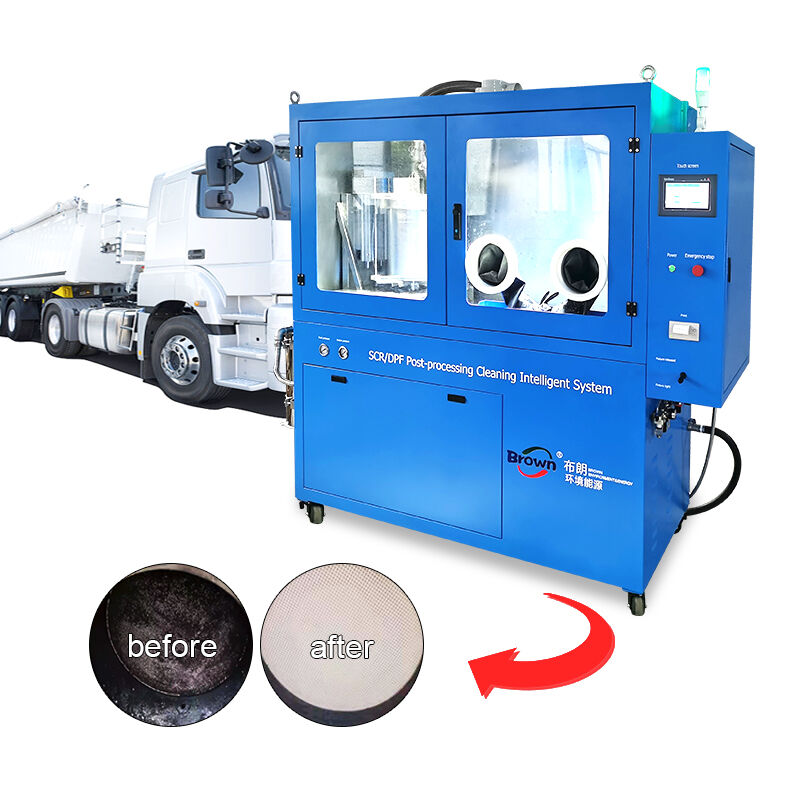
How Integrated Cleaning and Drying Enable True One-Step Regeneration
The Efficiency Gap: Why Sequential Cleaning and Drying Undermine Regeneration ROI
Traditional regeneration workflows separate cleaning and drying into distinct stages—forcing operators to move the DPF from a cleaning chamber to a separate drying station. Each transfer introduces handling delays, temperature drops, and wasted residual heat, requiring the system to reheat the substrate before drying can begin. Longer cycles directly increase energy use per regeneration and reduce throughput. For fleet managers tracking ROI, these inefficiencies compound quickly: sequential processes extend total cycle time by 30–50% compared to integrated one-step methods. That lost time reduces the number of filters processed per shift and inflates labor costs for manual transfers—eroding the financial return on regeneration equipment.
Thermodynamic Synergy: How Simultaneous Solvent Exchange and Vacuum Drying Accelerate Kinetics
True one-step regeneration leverages thermodynamic synergy: solvent exchange and vacuum drying occur simultaneously within a single chamber. As the cleaning solution mobilizes contaminants, vacuum pressure continuously removes the solvent-laden vapor before it can re-deposit, accelerating mass transfer kinetics. In a purpose-built DPF cleaner cleaning machine, the cleaning phase supplies the heat needed for drying—eliminating reheating losses—and the pressure gradient across the filter ensures penetration and removal happen at matched rates. This eliminates inter-stage waiting time and cuts total regeneration time by up to 60%. Faster kinetics transform a two-step batch process into a continuous, high-efficiency operation—boosting daily throughput without increasing energy demand.
DPF Cleaner Cleaning Machine: Benchmarking One-Step Performance in Heavy-Duty Applications
Real-World Validation: 62% Cycle Time Reduction Across Fleet Maintenance Workflows
Field data from heavy-duty fleet maintenance operations confirms that integrated one-step DPF cleaning machines reduce regeneration cycles by 62% versus traditional sequential methods. This gain comes from eliminating intermediate handling and drying steps—technicians load the filter once, and the machine executes solvent exchange and vacuum drying in a single, automated cycle. For a fleet servicing 50 trucks weekly, the reduction translates to ~18 fewer hours of machine downtime per week—directly improving bay utilization. The 62% improvement holds consistently across mixed fleets of Class 6 to Class 8 vehicles, validating scalability and real-world robustness.
Operational Advantages: Reduced Labor, Lower Energy Use, and Consistent Resin Recovery
The one-step architecture delivers operational benefits beyond speed. It eliminates manual filter transfers between units and removes the need to monitor transitions—cutting hands-on labor by over 40% and enabling single-operator loading/unloading. Energy use drops an estimated 30% per cycle because integrated vacuum drying recovers waste heat from the cleaning phase. A closed-loop resin recovery system captures regenerated cleaning solution with >95% consistency, reducing chemical waste and annual consumable spend. Together, these advantages lower total cost of ownership while sustaining consistent DPF performance across repeated regenerations.
Mitigating Resin Degradation Through Precision Integrated Process Design
A high-performance DPF cleaner cleaning machine must protect the ceramic substrate’s resin binder—the critical component holding the filter structure together. Integrated process design achieves this by tightly controlling temperature, pressure, and atmospheric composition throughout regeneration, preventing thermal stress and oxidation that accelerate resin degradation over repeated cycles.
Closed-Loop Systems and EPA Compliance: Why Dual-Chamber Vacuum Drying Prevents Oxidative Damage
Dual-chamber vacuum drying isolates the DPF during solvent removal, creating an oxygen-free environment that halts oxidative breakdown of the resin. This closed-loop system continuously monitors internal conditions—automatically adjusting vacuum levels and temperature to maintain optimal parameters without air ingress. The result is gentle, repeatable drying that preserves the resin’s mechanical integrity and chemical stability. By suppressing oxidation, the process also minimizes volatile organic compound (VOC) emissions, supporting compliance with EPA standards for stationary regeneration equipment. A stable resin extends DPF service life, lowers replacement costs, and ensures each regeneration restores the filter to original performance specifications—making cleaning a low-risk, sustainable part of long-term fleet operations.
FAQ
What is true one-step regeneration?
True one-step regeneration combines cleaning and drying within a single chamber, leveraging thermodynamic synergy to accelerate mass transfer kinetics and reduce cycle times by up to 60% compared to traditional sequential methods.
How does integrated cleaning and drying benefit fleet management?
Integrated cleaning and drying reduce handling delays and energy use, while increasing throughput and lowering labor costs. Fleet managers benefit from improved ROI and bay utilization.
What operational advantages do one-step DPF cleaning machines offer?
One-step machines lower total labor by 40%, decrease energy consumption by approximately 30%, and ensure consistent resin recovery, reducing waste and annual consumable expenses.
How does dual-chamber vacuum drying prevent resin degradation?
Dual-chamber vacuum drying creates an oxygen-free environment, halting oxidative damage and preserving the mechanical and chemical stability of the DPF's resin binder.
Are one-step regeneration systems EPA-compliant?
Yes, these systems minimize volatile organic compound (VOC) emissions and adhere to EPA standards, supporting environmentally responsible regeneration workflows.