 EN
EN

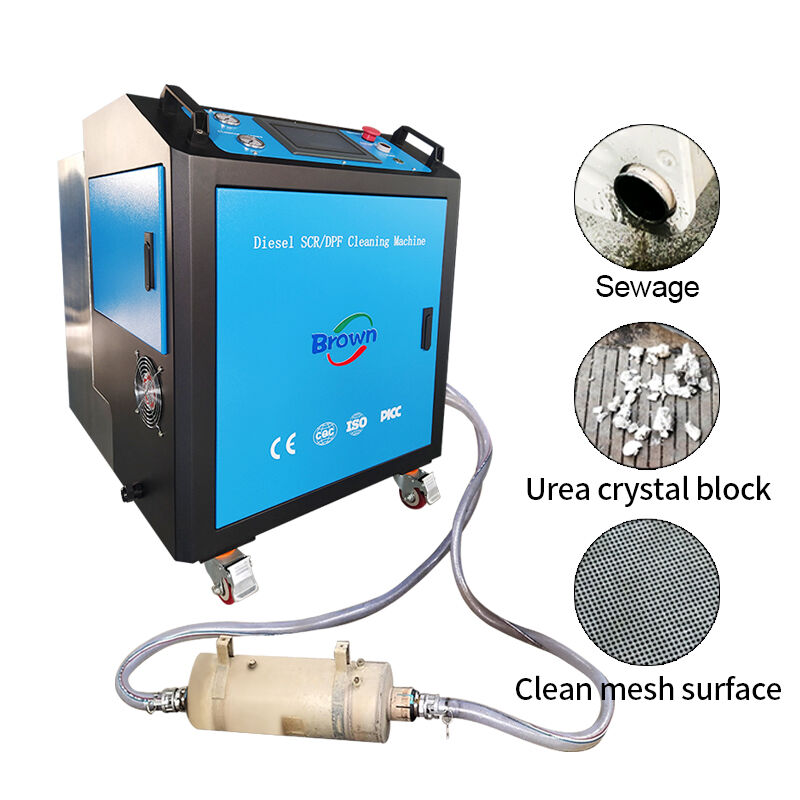
OEM-Specific DPF Cleaning Parameters: Temperature, Pressure, and Cycle Validation
Why OEM Specifications Dictate Safe and Effective DPF Cleaning Machine Design
OEM specifications define the safe operating windows for temperature, pressure, and cycle duration in a DPF cleaning machine. For thermal cleaning, temperatures must reach 600 °C to 800 °C to combust soot and oxidize accumulated particulate matter—yet precise control is essential to avoid thermal shock, especially in brittle ceramic substrates. Silicon carbide filters, by contrast, require lower-temperature cycles due to their distinct thermal expansion profile and sensitivity to rapid ramp rates. Pressure regulation is equally critical: optimal compressed air pressure ranges from 80 to 120 psi, with flow rate verification confirming restored airflow meets OEM back-pressure targets. Cycle validation relies on multi-stage profiles—ramp-up, soak, and controlled cool-down—that align with both filter material properties and contamination severity. Filters with ash loads exceeding 40 g typically require thermal cleaning; those under 15 g often respond well to aqueous methods. Programmable logic controllers (PLCs) automate these parameters, minimizing human error and ensuring consistent, repeatable results. Equipment mismatched to OEM specs can reduce cleaning efficacy by 30–50%, increasing the risk of incomplete regeneration, substrate damage, and premature filter replacement.
Real-World Validation Gap: When "OEM-Approved" DPF Cleaning Machines Fail Duty-Cycle Testing
Even machines marketed as “OEM-approved” may fail duty-cycle testing under real-world conditions. The gap emerges when validation occurs in idealized lab settings—stable ambient temperatures, single-filter loads, and low-ash test samples—while field operations involve mixed contamination types, fluctuating pressure drops, and tight service turnarounds. Vocational trucks operating in stop-and-go urban cycles, for example, accumulate ash significantly faster than highway vehicles, exposing limitations in fixed-parameter cleaning cycles. If a machine cannot dynamically adjust—such as extending soak time or fine-tuning ramp rates—it risks leaving residual ash or inducing microfractures in the substrate. Rigorous duty-cycle testing should simulate three to five consecutive cleanings across diverse filter types and contamination levels to validate consistency. Without this, shops face higher re-cleaning rates and customer dissatisfaction. Machines equipped with real-time pressure sensors, adaptive cycle logic, and closed-loop temperature monitoring are better positioned to meet OEM airflow recovery targets across variable conditions.
Trusted OEM-Endorsed DPF Cleaning Machine Brands and Custom Branding Options
Leading Tier 1 Suppliers: Technical Validation vs. White-Label Limitations
OEM validation remains the strongest technical differentiator in DPF cleaning machine selection. Equipment engineered by Tier 1 automotive suppliers undergoes comprehensive duty-cycle testing, granular temperature profiling, and pressure calibration—each tailored to specific engine families and emission system architectures. This ensures the cleaning process restores filter back pressure to factory tolerances without introducing thermal fatigue or mechanical stress. In contrast, white-label machines often generalize parameters to accommodate universal canister designs. That simplification introduces measurable performance trade-offs: without validated thermal ramping rates or calibrated reverse-flow volumes, these units may fail to remove stubborn ash deposits—or worse, crack cordierite substrates during thermal cycling. Fleet managers prioritizing branding over validation risk compromising the integrity of a critical emissions component.
White-Label DPF Cleaning Machines in Fleet Programs: Brand Alignment vs. Performance Risk
White-label DPF cleaning machines offer fleet programs clear advantages in corporate identity alignment and lower initial capital cost compared to proprietary systems from Tier 1 suppliers. Yet performance risk escalates when operational logic lacks adaptability to fleet-specific duty cycles. Urban delivery fleets generate finer, moisture-laden ash; long-haul operations produce denser, mineral-rich deposits—each demanding distinct cleaning profiles. A generically programmed white-label unit applying a light-duty cycle to a heavy-duty filter may leave behind 20–30% of ash mass, accelerating pressure rise and shortening filter life. Prioritizing brand consistency without verifying performance against actual fleet data—not just generic OEM thresholds—introduces avoidable operational liability.
Matching DPF Cleaning Machine Technology to Filter Material and Operational Demands
Thermal, Aqueous, and Ultrasonic DPF Cleaning Methods — Advantages and OEM Compatibility Constraints
Selecting the right DPF cleaning machine requires matching method to filter material, ash composition, and service requirements. Thermal cleaning uses high-temperature oxidation (600–700°C) to fully combust soot and heavy ash loads (>40 g), making it indispensable for severely clogged filters. However, repeated exposure to peak temperatures risks degrading silicon carbide substrates unless ramp rates and dwell times adhere strictly to OEM thermal endurance limits. Aqueous cleaning applies pressurized water and pH-balanced detergents to dissolve soluble residues and remove light ash (<15 g), avoiding thermal stress entirely—but demands thorough, controlled drying to prevent moisture-induced cracking during subsequent engine regeneration. Ultrasonic cleaning leverages high-frequency cavitation to dislodge deeply embedded particles from fine-pore ceramic and cordierite filters, delivering gentle yet effective decontamination for low-to-moderate ash loads. It does not replace thermal or aqueous methods for heavy accumulation and typically requires pre-cleaning to remove bulk deposits.
| Method | Ideal Contamination Level | Filter Material Compatibility | OEM Constraint |
|---|---|---|---|
| Thermal | >40 g ash | Silicon carbide, cordierite (with temperature limits) | Risk of thermal fatigue if cycle temp exceeds OEM specs |
| Aqueous | <15 g ash | Cordierite, metal fiber | Requires extended drying; moisture traps lead to failure |
| Ultrasonic | Low to moderate | Ceramic, cordierite (fine pores) | Ineffective on heavy ash; may need pre-cleaning |
Ultimately, cleaning efficacy hinges not on method alone—but on how precisely machine parameters align with OEM engineering intent, filter substrate behavior, and real-world operational demands.
FAQ Section
What is the importance of OEM specifications in DPF cleaning?
OEM specifications are crucial for defining safe operating parameters such as temperature, pressure, and cycle duration. Adherence to these ensures effective cleaning without risking filter damage or incomplete regeneration.
How do real-world conditions impact OEM-approved DPF cleaning machines?
In real-world operations, machines face diverse contamination types, pressure fluctuations, and time constraints. Without adaptive capabilities, such machines may fail to clean filters effectively, leading to incomplete ash removal or even damage.
What are the main differences between Tier 1 and white-label DPF cleaning machines?
Tier 1 machines undergo rigorous OEM validation with custom parameters for specific engine types, ensuring reliable performance. White-label machines may generalize parameters, creating risks like residual ash accumulation or mechanical stress.
How should DPF cleaning methods align with filter material and contamination levels?
Different methods—thermal, aqueous, and ultrasonic—are suited to specific materials and contamination levels. Proper alignment ensures effective cleaning while adhering to OEM specifications and avoiding substrate damage.