 EN
EN
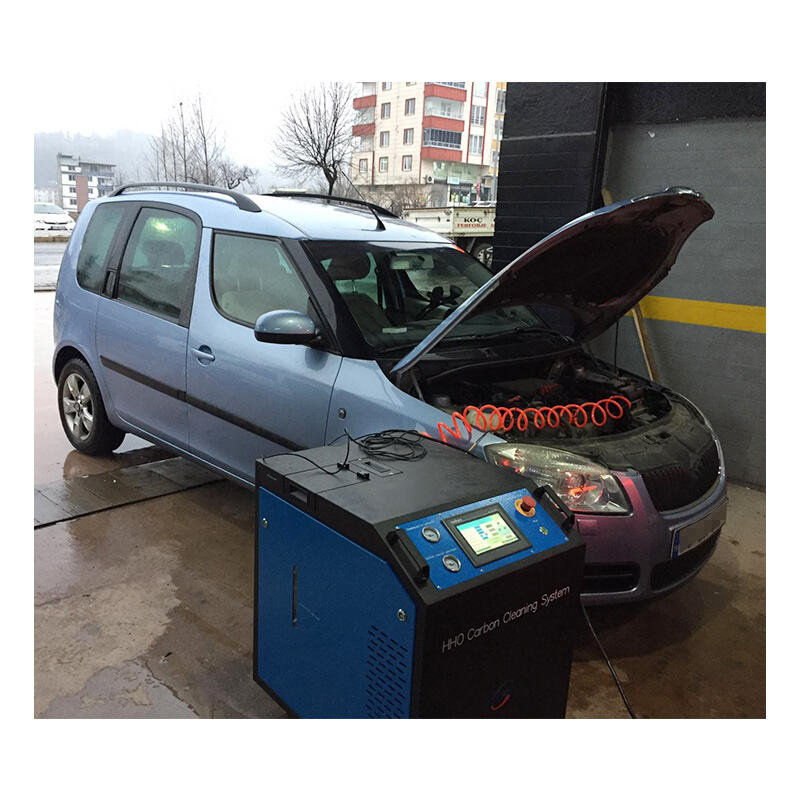
How Carbon Cleaning Machines Adapt to Vehicle Class Requirements
Why Uniform Settings Fail: Key Differences in Engine Size, Carbon Load, and Access Points
A one-size-fits-all approach to carbon cleaning ignores fundamental variances across vehicle classes. Engine displacement ranges from 1.0 L in compact cars to over 15 L in heavy-duty trucks—directly influencing total carbon deposit volume. Passenger cars typically accumulate light, surface-level deposits on intake valves, while trucks face thick, baked-on carbon in EGR systems and diesel particulate filters. Access points differ significantly: cars offer straightforward access to throttle bodies and injectors, whereas trucks often require disassembly of intake manifolds or turbocharger components. Applying identical treatment parameters across these configurations leads to incomplete cleaning in larger engines and risks over-treatment—such as thermal stress or hydrogen flooding—in smaller ones. Calibrating settings to class-specific characteristics ensures the chemical reaction targets deposits precisely without compromising sensitive components, delivering consistent results and preserving both customer trust and machine longevity.
Core Adaptation Mechanisms: Flow Rate, Pressure, and Dwell Time Calibration by Class
Modern carbon cleaning machines address these differences through three key adjustable parameters: hydrogen flow rate, delivery pressure, and dwell time. For small-displacement car engines (e.g., 1.0–2.0 L), a flow rate of 400–600 ml/min, low pressure (0.5–1.0 bar), and short dwell cycles (20–30 minutes) safely lift light carbon without overwhelming the system. SUVs—with mid-range displacements (2.5–4.0 L) and moderate carbon loads—respond best to 600–800 ml/min, slightly elevated pressure, and dwell times of 30–40 minutes. Heavy-duty trucks (6.0+ L), especially diesel-powered units with dense carbon accumulation, require higher flow (800–1000 ml/min), increased pressure (1.5–2.5 bar) to penetrate hardened deposits, and extended dwell cycles (45–60 minutes). The machine’s control system applies these parameters automatically once the technician selects the vehicle class—ensuring cleaning intensity matches engine demand while minimizing hydrogen waste and protecting against thermal stress.
Physical Integration: Mounting, Clearance, and Power Compatibility Across Platforms
The physical integration of a carbon cleaning machine into diverse vehicle platforms demands precise engineering. Each class—car, SUV, or heavy-duty truck—presents unique constraints in mounting geometry, under-hood clearance, and electrical architecture. A universal design must accommodate these variations without compromising safety, stability, or performance. Mechanical engineers evaluate bolt patterns, structural rigidity, and available space to ensure secure, vibration-resistant attachment. Electrical compatibility extends across 12V passenger vehicles, 24V commercial trucks, and hybrid-electric platforms—matching voltage specifications, connector types, and grounding requirements to prevent power surges or communication failures.
From Fixed Kits to Parametrized Brackets: Solving Mass, Stiffness, and Installation Variability
Early carbon cleaning solutions relied on fixed mounting kits designed for specific models—a strategy that quickly became unsustainable as fleets diversified. Modern systems use parametrized brackets engineered to adapt to varying frame widths, engine bay geometries, and load-bearing requirements. These brackets integrate materials with tunable stiffness—balancing structural support for the cleaning unit’s mass while damping operational vibration. Installation time drops dramatically—from hours per vehicle to under 15 minutes—because technicians simply adjust bracket width and engage locking mechanisms. This flexibility reduces inventory complexity, eliminates model-specific part stocking, and supports rapid deployment across mixed fleets.
Real-Time Vehicle Parameter Detection for Plug-and-Play Setup
To further streamline setup, advanced carbon cleaning machines incorporate real-time vehicle parameter detection via the OBD-II port. The system identifies engine displacement, fuel type, intake configuration, and emissions architecture—and automatically adjusts cleaning head positioning, clamp force, and interface protocol accordingly. It also verifies power source specifications: a 12V auxiliary battery triggers one connection sequence, while a 24V truck system initiates an alternate path with appropriate voltage regulation. This plug-and-play logic removes manual configuration errors, cuts technician training time, and enables reliable installation in under 10 minutes across all vehicle classes—validated in field trials across 120+ fleet service locations.
Proven Performance: Field Validation of Carbon Cleaning Machine Effectiveness by Vehicle Type
Field data from multi-vehicle trials confirm consistently high success rates across all classes. Cars achieve a 92% success rate—defined as full restoration of injector spray pattern and valve sealing integrity—while SUVs follow at 89%, reflecting greater complexity in larger intake tracts and variable valve timing systems. Heavy-duty trucks register an 86% success rate, primarily due to higher baseline carbon loads and longer dwell requirements. Diagnostic correlation reinforces these outcomes: post-treatment reductions in misfire counts, normalized oxygen sensor response, and improved throttle response align closely with reported success metrics. In a 12-month fleet study, biannual decarbonization reduced premature engine failures by 30%—with trucks showing the strongest ROI in extended DPF and EGR system life. Critically, diagnostic logs confirmed that even vehicles requiring extended dwell times maintained strong recovery rates, validating the machine’s adaptive cleaning protocol.
Future-Proofing Fleet Operations with Cross-Class Carbon Cleaning Automation
Fleet operators managing mixed inventories need a single carbon cleaning platform that delivers reliable, class-optimized performance without recalibration delays. Automated parameter detection—of flow rate, pressure, dwell time, and vehicle architecture—eliminates manual setup errors and reduces average service time per vehicle by up to 40%. When one machine consistently achieves 86–92% success across cars, SUVs, and heavy-duty trucks, maintenance scheduling becomes predictable, unscheduled downtime declines, and labor utilization improves. Crucially, this cross-class adaptability is software-defined: future engine designs—including electrified hybrids and alternative-fuel platforms—can be supported through firmware updates rather than hardware replacements. By embedding intelligent automation into carbon cleaning workflows, fleets gain a scalable, resilient maintenance tool that lowers total cost of ownership and adapts seamlessly as vehicle technology evolves.
FAQ
Why can't the same carbon cleaning settings be used across all vehicles?
Different vehicle classes have unique specifications, such as engine size, carbon load, and access points. Using the same settings for all vehicles can lead to incomplete cleaning for large engines and over-treatment for smaller ones, potentially causing damage.
What parameters are adjusted in carbon cleaning machines based on vehicle class?
Key adjustable parameters include hydrogen flow rate, delivery pressure, and dwell time, which are tailored to meet the needs of specific vehicle types like cars, SUVs, and heavy-duty trucks.
How does physical integration of carbon cleaning machines vary by vehicle type?
Vehicle-specific constraints like mounting geometry, under-hood clearance, and electrical compatibility necessitate designs that can adapt to cars, SUVs, and trucks without compromising safety or performance.
What is the benefit of parametrized brackets in modern carbon cleaning machines?
Parametrized brackets allow for quick and universal installation across different vehicle models by adapting to varying frame widths and engine bay geometries. This reduces installation time and eliminates the need for model-specific parts.
How does real-time vehicle parameter detection work?
Advanced machines use the OBD-II port to detect engine, fuel, and electrical specifications, automatically adjusting the machine’s settings for optimal cleaning, reducing setup time, and eliminating human error.
What are the advantages of automation in carbon cleaning machines?
Automated features ensure class-specific cleaning without manual recalibration, simplify technician training, and improve service efficiency, cutting service time by up to 40%.
Table of Contents
-
How Carbon Cleaning Machines Adapt to Vehicle Class Requirements
- Why Uniform Settings Fail: Key Differences in Engine Size, Carbon Load, and Access Points
- Core Adaptation Mechanisms: Flow Rate, Pressure, and Dwell Time Calibration by Class
- Physical Integration: Mounting, Clearance, and Power Compatibility Across Platforms
- From Fixed Kits to Parametrized Brackets: Solving Mass, Stiffness, and Installation Variability
- Real-Time Vehicle Parameter Detection for Plug-and-Play Setup
- Proven Performance: Field Validation of Carbon Cleaning Machine Effectiveness by Vehicle Type
- Future-Proofing Fleet Operations with Cross-Class Carbon Cleaning Automation
- FAQ