 EN

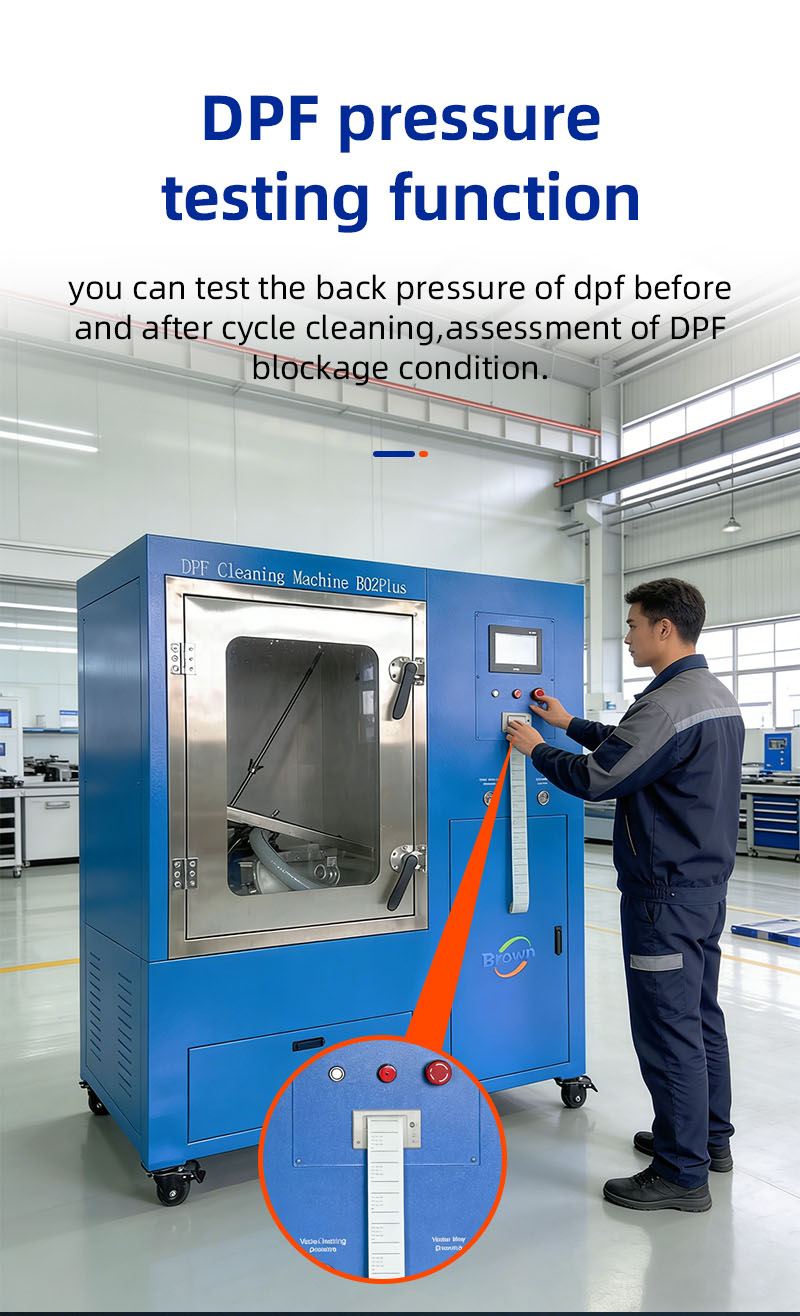
Regulatory Compliance as the Core Driver of DPF Cleaner Cleaning Machine Design
Euro 6, China VI, and EPA Tier 4: How Emission Standards Dictate Cleaning Precision, Cycle Time, and Validation Protocols
Global emission regulations define the performance thresholds every DPF (diesel particulate filter) cleaning machine must meet. Euro 6 limits diesel PM to 0.005 g/km, while EPA Tier 4 caps it at 0.01 g/bhp‑hr. China VI—harmonized with Euro 6 since 2021—enforces comparable near-zero limits. These standards compel workshops to use machines capable of restoring filter backpressure to within 10% of original specification. To pass post-cleaning validation per SAE J1667 (2019), a machine must remove over 95% of accumulated soot and ash. That precision directly shapes cycle time: a full cleaning cycle typically replicates a 60-minute regeneration process under controlled thermal and air-knife conditions.
Validation protocols differ regionally. EU operators commonly monitor differential pressure across the filter during cleaning; US fleets rely on portable particle counters (PN-PEMS) to verify outlet particle counts below 10¹² #/kWh. The following table contrasts how regional mandates shape core machine design parameters.
| Regulation | PM Limit | Required Cleaning Precision | Typical Cycle Time | Validation Protocol |
|---|---|---|---|---|
| Euro 6 | 0.005 g/km | >95% soot/ash removal, backpressure ≤10% above new | 50–70 minutes | In-situ pressure drop monitoring; optional PN measurement |
| EPA Tier 4 | 0.01 g/bhp‑hr | >90% removal, backpressure <15% above new | 40–60 minutes | Portable particle counter (PN-PEMS) after cleaning |
| China VI | 0.005 g/km | >95% removal, strict adherence to OBD thresholds | 55–75 minutes | Full flow bench with opacity and backpressure test |
By aligning cleaning precision, cycle time, and validation to these legal mandates, manufacturers help fleet operators avoid penalties and maintain emissions compliance across global markets.
Scalable DPF Cleaner Cleaning Machine Architecture Across Market Tiers
OV Spark & OV10i: Cost-Optimized DPF Cleaner Cleaning Machines for Labor-Intensive, Emerging-Market Workshops
Entry-level DPF cleaning machines address a critical market reality: in emerging economies, capital constraints often outweigh demands for automation. These pneumatic or semi-pneumatic systems prioritize mechanical simplicity—manual loading, single-nozzle operation, and robust stainless steel construction. Designed for high labor availability and growing repair cultures, they deliver effective ash removal without complex software. Their durable, low-tech platform ensures consistent filter recovery even amid voltage instability or limited digital infrastructure—providing a vital entry point into professional, regulated DPF maintenance.
OV20i & OV80i: Balanced-Automation DPF Cleaner Cleaning Machines for Mid-Scale Fleet Operators in EU and APAC
Mid-tier DPF cleaners serve operators balancing regulatory rigor with moderate volume. These units introduce automated pulse-cleaning cycles and integrated thermal drying, using controlled air pressure and frequency to dislodge deep ash without damaging the ceramic substrate. An onboard HMI logs differential pressure before and after cleaning—documentation that directly supports Euro VI and China VI compliance audits. Flexible by design, a single unit can service a 50-truck fleet in Germany or support a shared-service hub in Thailand. This balanced-automation model delivers factory-grade repeatability while preserving the technician’s diagnostic role—the practical sweet spot between manual labor and high-end robotics.
OVX Flagship: AI-Powered DPF Cleaner Cleaning Machine with Real-Time Soot Mapping and Predictive Diagnostics
The premium tier redefines DPF cleaning as asset intelligence. These systems integrate AI-driven soot mapping sensors that scan filter density pre- and mid-cycle, dynamically adjusting nozzle path, pressure, and dwell time based on real-time resistance data. This minimizes cycle time and prevents substrate stress—extending total filter lifespan. Predictive diagnostics analyze fleet-wide historical data to forecast remaining service life, enabling proactive cleaning scheduling and avoiding unscheduled regeneration failures. Each session generates a tamper-proof digital validation log—serving as a verifiable certificate of restoration for warranty claims and trade-ins. This architecture shifts value from simple cleaning to comprehensive, data-driven asset management for high-throughput, compliance-sensitive operations.
Regional Deployment Realities: Infrastructure, Labor, and Service Network Alignment
Urban EU Hubs vs. LATAM Mobile Units vs. APAC Modular Depots: Matching DPF Cleaner Cleaning Machine Footprint to Operational Context
DPF cleaning machine deployment must reflect local infrastructure, labor capacity, and service network maturity. A rigid, one-size-fits-all layout risks underutilization in some markets and throughput bottlenecks in others. The table below contrasts three prevalent regional models and their required machine footprints.
| Region | Deployment Model | Footprint Characteristics | Infrastructure Requirements | Labor Considerations |
|---|---|---|---|---|
| Urban EU Hubs | Centralized high-throughput workshops | Compact, stationary units with automated cleaning and validation cycles | Stable three-phase power, direct air-line connections, enclosed bays for emission control | Skilled technicians for diagnostics and operation; certification programs widely available |
| LATAM Mobile Units | Truck- or trailer-mounted mobile DPF cleaning fleets | Portable, vibration-resistant units with integrated air compressors and generator sets | Minimal fixed infrastructure; reliance on mobile power and compressed air; designed for irregular grids | Multi-skilled operator-mechanics; cross-training covers equipment handling and basic repair to fill service gaps in sparse technician networks |
| APAC Modular Depots | Containerized or modular workshops deployed near fleet hubs | Interchangeable cleaning modules (dry, wet, thermal) with plug-and-play connectivity | Moderate infrastructure: container-level power and ventilation; often co-located with existing fleet maintenance yards | Semi-skilled workforce guided by standardized modules; local technicians leverage remote support and standardized guides to manage multiple module types |
By matching machine footprint—from stationary automated bays to mobile units and reconfigurable modular depots—to operational context, providers maintain service continuity despite infrastructure gaps. Purpose-built designs meet region-specific compliance needs, while tailored training mitigates labor shortages—reducing unscheduled downtime and extending service reach across dense urban clusters and dispersed rural routes.
FAQ
What are the global emissions standards affecting DPF cleaner machines?
Global standards such as Euro 6, China VI, and EPA Tier 4 dictate stringent limits for particulate matter emissions. They require DPF cleaners to achieve a minimum precision in soot and ash removal and restore backpressure to within 10-15% of the original specification.
How do validation protocols differ across regions?
Region-specific validation protocols vary from in-situ pressure drop monitoring in the EU to using portable particle counters in the US and full bench testing in China.
What are the unique features of premium-tier DPF cleaner machines?
Premium-tier machines integrate AI-driven soot mapping, predictive diagnostics, and tamper-proof validation logs for asset management and compliance-sensitive operations.
How are DPF cleaning machines deployed in different regions?
Machines are deployed according to local infrastructure and service needs, such as centralized workshops in urban EU areas, mobile units in LATAM, and modular depots in APAC regions.
Table of Contents
- Regulatory Compliance as the Core Driver of DPF Cleaner Cleaning Machine Design
-
Scalable DPF Cleaner Cleaning Machine Architecture Across Market Tiers
- OV Spark & OV10i: Cost-Optimized DPF Cleaner Cleaning Machines for Labor-Intensive, Emerging-Market Workshops
- OV20i & OV80i: Balanced-Automation DPF Cleaner Cleaning Machines for Mid-Scale Fleet Operators in EU and APAC
- OVX Flagship: AI-Powered DPF Cleaner Cleaning Machine with Real-Time Soot Mapping and Predictive Diagnostics
- Regional Deployment Realities: Infrastructure, Labor, and Service Network Alignment
- FAQ