 EN
EN

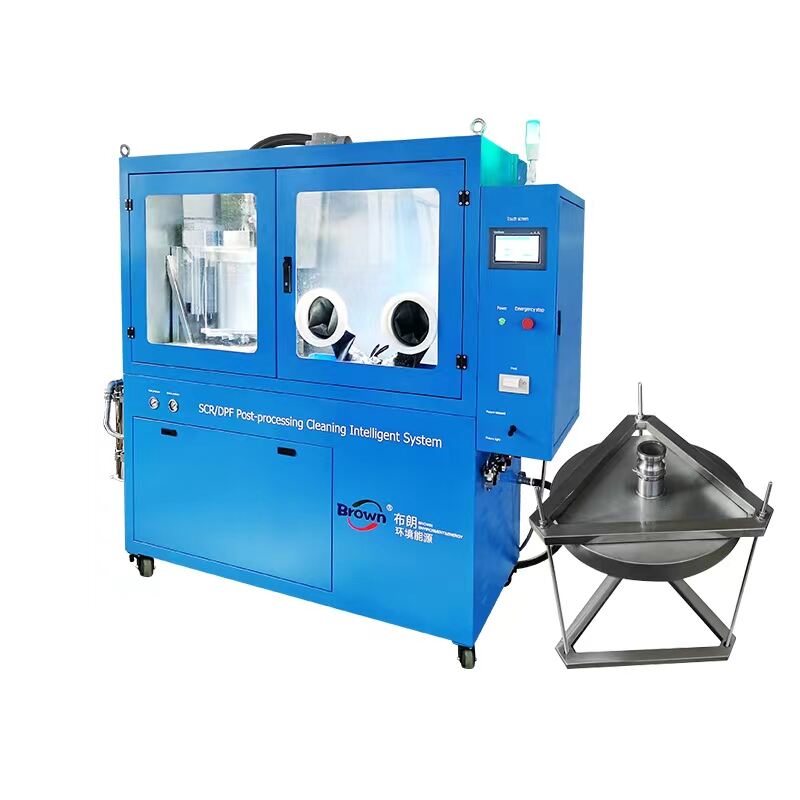
How a DPF Cleaner Machine Prevents Structural Degradation
Ash and Soot Buildup: The Primary Cause of Ceramic Substrate Fatigue
Continuous ash and soot accumulation within a diesel particulate filter (DPF) exerts physical stress on the ceramic substrate. This residue acts as an abrasive during passive regeneration, gradually eroding microscopic cell walls. As density increases, thermal expansion differentials between clogged and clean sections generate microfractures—especially under repeated thermal cycling. Over time, these fractures propagate, compromising structural integrity. Left unaddressed, this fatigue leads to catastrophic substrate failure, necessitating full replacement rather than cleaning.
Controlled Energy Delivery: Why Precision Cleaning Preserves Filter Integrity
Advanced DPF cleaner machines prevent degradation through calibrated, multi-stage energy application—unlike uncontrolled thermal regeneration. Key protocols include:
- Ultrasonic cavitation: Dissolves carbon chains at resonant frequencies below washcoat damage thresholds
- Variable-pressure airflow: Dislodges ash pockets without exceeding cordierite or silicon carbide (SiC) tensile limits
- Temperature-monitored drying: Prevents steam-induced ceramic shock via gradual ramp profiles
This approach achieves >92% contaminant removal while preserving substrate morphology. Filters cleaned with such precision match new units in backpressure performance—eliminating premature replacement costs.
Contaminant Removal Efficacy of Modern DPF Cleaner Machines
Targeting Soot, Ash, Oil, and Upstream Debris Without Damaging Washcoats
A high-performing DPF cleaner machine must remove soot, ash, unburned oil, and upstream engine debris—all without degrading the catalytic washcoat. Thermal regeneration often exceeds 600°C, risking washcoat sintering and reduced NOx/CO conversion efficiency over time. In contrast, ultrasonic cleaning with controlled frequency and temperature dislodges embedded ash without thermal stress, while low-pressure aqueous cycles dissolve oil residues without eroding the porous substrate. By targeting only blockages—not functional layers—the washcoat remains intact, preserving catalytic performance.
Ultrasonic + Low-Pressure Aqueous Hybrid Cycles: >92% Ash Extraction Verified
Combining ultrasonic cavitation with low-pressure aqueous flushing delivers verified ash extraction rates above 92%. Ultrasonic waves generate microbubbles that collapse near ash deposits, fracturing adhesive bonds without damaging ceramic walls; a gentle water rinse then flushes out loosened particles. This hybrid method avoids the high temperatures and mechanical force that degrade structure. Independent testing confirms filters cleaned this way recover ≥95% of original airflow capacity—directly lowering back pressure and extending service intervals.
Material-Specific Protocols: Optimizing DPF Cleaner Machine Settings for Cordierite and SiC Filters
A high-quality DPF cleaner machine must adapt its protocol to the substrate material to avoid damage and maximize cleaning efficacy. Cordierite filters—common in light-duty applications—are brittle and prone to cracking under high pressure; optimal cleaning requires pressures below 100 psi. Silicon carbide (SiC) substrates tolerate higher temperatures but still risk melting or stress fractures if thermal cycles exceed safe thresholds. Advanced machines automatically adjust ultrasonic frequencies (28–40 kHz) and thermal phases (500–700°C) based on real-time soot mass readings, ensuring uniform ash removal across hexagonal and cylindrical geometries. Cell density—typically 200–400 CPSI—also influences protocol design: higher-density filters demand longer soak times for solution penetration. Field data shows using incompatible settings reduces cleaning effectiveness by 30–50%, underscoring why material-specific calibration is essential for longevity and structural preservation.
Operational Validation: How DPF Cleaner Machines Reduce Back Pressure and Extend Replacement Intervals
Passive regeneration burns off soot during normal driving—but leaves non-combustible ash untouched. Over time, ash accumulates in ceramic channels, steadily increasing back pressure. Crucially, engine control units often interpret rising differential pressure as acceptable until thresholds are severely exceeded, masking progressive degradation. A filter may pass diagnostics while already carrying irreversible ash loading—fleet operators frequently discover this only when forced regenerations spike, signaling that passive cleaning alone is no longer sufficient.
The Regeneration Paradox: Why Passive Cycles Mask Cumulative Ash Damage
Because passive regeneration removes only soot, ash accumulates silently with every cycle. Each regeneration subjects the stressed, ash-laden substrate to additional thermal strain—accelerating micro-crack formation and filtration loss. The paradox lies in apparent operational continuity: the vehicle runs normally while the filter’s service life erodes unseen.
Real-World Impact: 2.8x Longer Time-to-First Replacement in Fleet Studies
Controlled fleet comparisons show trucks receiving regular DPF cleaner machine services average 2.8 times longer before first filter replacement versus those relying solely on passive regeneration. This extension directly reduces capital expenditure on replacements and eliminates unscheduled downtime. Post-cleaning reductions in back pressure also restore engine responsiveness and improve fuel economy—making the DPF cleaner machine a validated tool for both operational reliability and cost control.
FAQ
What causes structural degradation in DPF filters? Ash and soot buildup exert physical stress on the ceramic substrate, causing thermal expansion differences, microfractures, and eventual structural failure.
How do DPF cleaner machines prevent damage? They use controlled ultrasonic cavitation, variable-pressure airflow, and temperature-monitored drying to remove contaminants without degrading structural integrity.
Why is targeting ash removal crucial for filter health? Ash remains after passive regeneration and contributes to substrate fatigue, leading to increased back pressure and filtration loss.
What are material-specific cleaning protocols? Cordierite and silicon carbide (SiC) filters require different pressure, thermal, and ultrasonic settings tailored to their unique properties to ensure safe and effective cleaning.
How does regular DPF cleaning impact fleet operations? It extends filter replacement intervals by 2.8 times on average, reduces downtime, and improves engine performance and fuel economy.
Table of Contents
- How a DPF Cleaner Machine Prevents Structural Degradation
- Contaminant Removal Efficacy of Modern DPF Cleaner Machines
- Material-Specific Protocols: Optimizing DPF Cleaner Machine Settings for Cordierite and SiC Filters
- Operational Validation: How DPF Cleaner Machines Reduce Back Pressure and Extend Replacement Intervals
- FAQ