 EN
EN

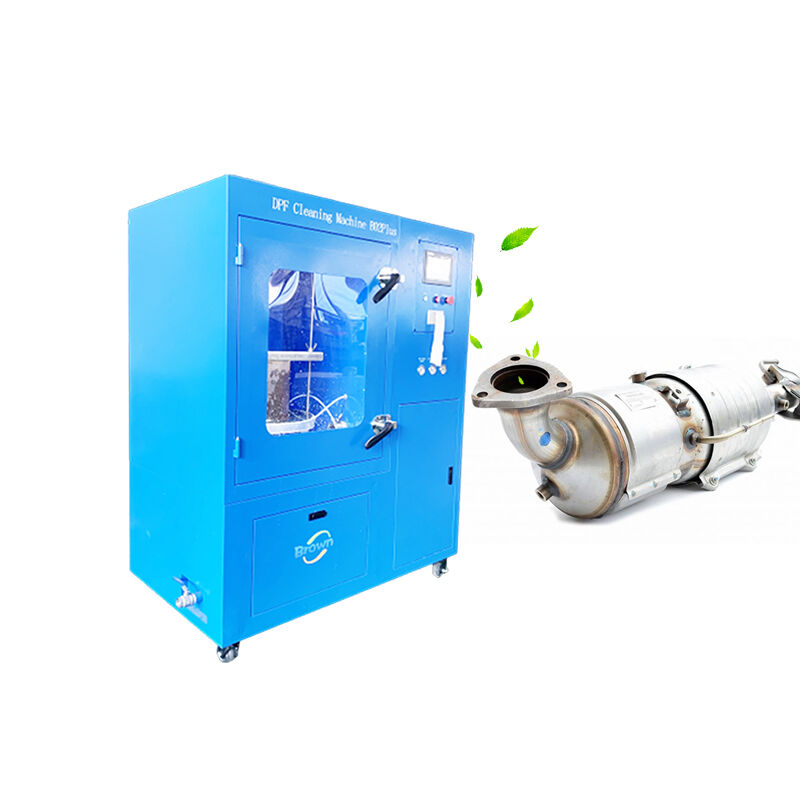
How a Clogged DPF Impairs Engine Performance and Fuel Efficiency
Exhaust Flow Restriction and Increased Backpressure
A diesel particulate filter (DPF) traps soot and ash during normal operation. Over time, non-combustible ash accumulates and creates a physical blockage—restricting exhaust flow like a kinked hose. This forces the engine to work harder against rising backpressure, directly reducing available power. Drivers often notice sluggish acceleration, reduced towing capacity, or delayed throttle response. Modern engines respond by retarding injection timing and limiting boost pressure—compensations that further erode performance and increase fuel consumption. Even modest restriction levels can trigger these adjustments, making scheduled cleaning with a professional DPF cleaning machine essential for preserving factory-calibrated responsiveness and efficiency.
Impact on EGR System Efficiency and Combustion Stability
Elevated backpressure from a clogged DPF disrupts the precise pressure differentials required for effective exhaust gas recirculation (EGR). As the pressure drop across the EGR circuit narrows, less cooled exhaust gas returns to the intake manifold. This shifts the air-fuel ratio, raises in-cylinder combustion temperatures, and promotes incomplete combustion—increasing soot formation and accelerating DPF re-clogging. The result is degraded combustion stability: rough idling, hesitation under load, and elevated vibration. These symptoms signal systemic inefficiency—not just a dirty filter—and underscore why professional DPF cleaning is foundational to restoring full emission system integrity and engine behavior.
Real-World Fleet Data: Power Loss and Fuel Penalty Trends
Commercial fleet data confirms measurable performance and efficiency penalties tied directly to DPF restriction. When soot loading exceeds 45 g/L of filter volume, peak horsepower typically drops 5–10%. Fuel economy follows closely: consumption rises 2–4% under mixed driving conditions—and up to 8% during sustained heavy-haul operations. Over 50,000 miles, this translates to thousands of dollars in avoidable fuel costs. Critically, drivers report noticeable power loss before dashboard warning lights activate—meaning degradation occurs silently and cumulatively. Proactive cleaning at recommended intervals prevents these hidden losses and maintains predictable operating costs.
Cost Savings from Professional DPF Cleaning vs. Replacement
Ignoring early DPF warnings triggers a cascade of failures. Minor soot buildup initiates passive regeneration; repeated failures escalate to high-temperature active cycles. Persistent blockage leads to progressive engine derating—25%, then 50%, then 75% power reduction—culminating in forced shutdown. Fleet operators report an average $740 daily revenue loss per truck during unplanned downtime (Ponemon Institute, 2023). Addressing the issue at the first regeneration failure—via professional cleaning—averts operational disruption entirely.
Lifecycle Cost Comparison: $350–$600 DPF Cleaning Machine Service vs. $2,200–$4,500 OEM Replacement
| Cost Factor | Professional Cleaning | Full Replacement |
|---|---|---|
| Service Cost | $350 – $600 | $2,200 – $4,500 |
| Vehicle Downtime | 4 – 8 hours | 3 – 7 days |
| Secondary Costs | Minimal | Rental vehicles, towing, labor escalation |
| Long-Term Viability | 3+ additional cleaning cycles | Single use |
Certified workshops using professional DPF cleaning machines restore up to 95% of original filtration efficiency at roughly 20% of the cost of replacement. Fleet analysis shows a clear 12-month ROI when cleaning protocols are standardized—with class-8 trucks realizing cost-per-mile reductions exceeding $0.03.
Ensuring Environmental Compliance Through Proactive DPF Maintenance
A clogged DPF compromises emissions control at the system level. Once ash accumulation exceeds ~40 g/L, filtration efficiency declines sharply—allowing excessive particulate matter (PM) and nitrogen oxides (NOx) to bypass the filter. Real-world testing shows such units frequently exceed Euro 6d limits: 0.08 g/kWh for NOx and 0.01 g/kWh for PM. This isn’t just an environmental concern—it’s a legal risk.
Rising Regulatory Scrutiny: Roadside DPF Integrity Checks (UK DVSA, German TÜV)
Transport authorities now enforce DPF integrity through unannounced roadside inspections. The UK’s Driver and Vehicle Standards Agency (DVSA) and Germany’s TÜV use calibrated opacity meters to measure smoke absorption, imposing £300 on-the-spot fines and immediate prohibition notices for readings above 0.25 m⁻¹. These checks target both deleted filters and poorly maintained systems where ash-induced restriction degrades function. Regular cleaning with a certified DPF cleaning machine—not only preserves compliance but also generates auditable service records that demonstrate due diligence.
FAQ Section
What is a DPF and why is it important?
A diesel particulate filter (DPF) traps soot and ash emissions generated by diesel engines, reducing pollution and maintaining environmental compliance.
What are the signs of a clogged DPF?
Signs include sluggish acceleration, reduced towing power, rough idling, and increased fuel consumption. Power loss often occurs before dashboard warning lights activate.
How often should a DPF be cleaned?
Scheduled cleaning intervals vary, but using professional DPF cleaning machines every 50,000 miles is generally recommended to prevent performance degradation.
What are the cost benefits of cleaning vs. replacing a DPF?
Cleaning costs $350–$600 and offers 3+ additional cycles, while replacement costs $2,200–$4,500 and comes with extended downtime.